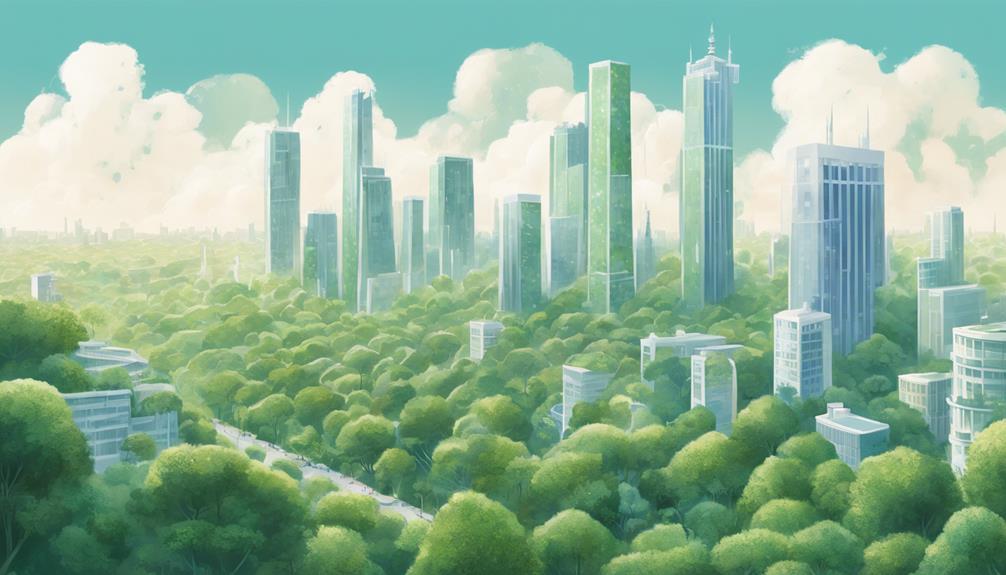
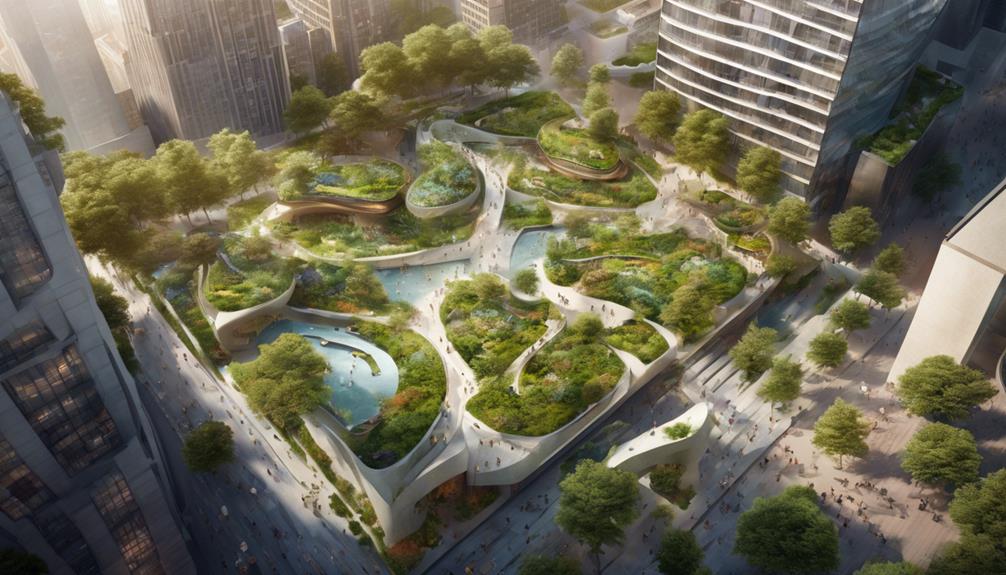
As urban populations swell, architects and city planners are harnessing green architecture to revamp public spaces. By prioritizing green spaces, community engagement, and sustainable infrastructure, they're creating vibrant, dynamic environments that foster human connection and a deeper bond with nature. From biophilic design to sustainable materials and green roofs, each element plays an essential role in mitigating the environmental impact of urbanization. And it doesn't stop there – by revitalizing neglected areas, cities can stimulate local economies and preserve cultural heritage. As we explore the intersection of nature and urban planning, we uncover a future where cities thrive in harmony with the environment.
Rethinking Urban Planning Strategies
As cities continue to sprawl and urban populations swell, architects and urban planners must rethink their strategies to prioritize green spaces and sustainable development. The traditional approach to urban planning is no longer viable, and innovative solutions are needed to create livable, eco-friendly cities. Community engagement is key to this transformation, as it allows residents to take an active role in shaping their urban environment. By involving citizens in the planning process, architects can design spaces that cater to the community's unique needs and promote a sense of ownership.
Infrastructure revamp is another vital aspect of this transformation. Outdated infrastructure can hinder the adoption of sustainable practices, making it essential to revitalize existing systems and incorporate green technology. This includes upgrading transportation systems, implementing green roofs, and integrating renewable energy sources. By doing so, cities can reduce their carbon footprint and create healthier environments for residents.
Through community engagement and infrastructure overhaul, cities can progress towards a more sustainable future. By prioritizing green spaces and innovative design, architects can create vibrant public areas that not only mitigate the effects of urbanization but also foster a sense of community. As the world becomes increasingly urbanized, it's essential to rethink urban planning strategies to create cities that are not only sustainable but also livable and enjoyable for generations to come.
Biophilic Design for Public Spaces
By incorporating biophilic design principles, architects can create public spaces that not only promote sustainability but also foster a deep connection between humans and nature. This approach emphasizes the importance of natural elements in urban design, bringing the outdoors in and creating a seamless flow between built and natural environments. As a result, public spaces become more inviting, enhancing the overall user experience and promoting a sense of well-being.
One of the key elements of biophilic design is the incorporation of natural light. By maximizing natural light exposure, architects can reduce the need for artificial lighting, minimizing energy consumption and creating a more sustainable environment. Additionally, natural light has a profound impact on human psychology, boosting mood and productivity while reducing stress levels. In public spaces, natural light can be harnessed through strategic window placement, skylights, and green roofs, creating a brighter, more welcoming atmosphere.
Biophilic design also prioritizes human connection, encouraging social interaction and community building. By incorporating green spaces, public art, and interactive installations, architects can create vibrant, dynamic environments that foster a sense of community. As people connect with nature and each other, public spaces become hubs of social activity, promoting a stronger, more cohesive community. By integrating biophilic design principles, architects can transform public spaces into thriving hubs of sustainability, social connection, and human well-being.
Sustainable Materials and Systems
Architects are increasingly specifying sustainable materials and systems in public spaces to minimize environmental impact and promote eco-friendly urban development. This shift towards sustainable design is essential, as the built environment is responsible for nearly 40% of global carbon emissions. By incorporating sustainable materials and systems, architects can greatly reduce the carbon footprint of public spaces.
One innovative approach is the integration of carbon capture technology into building design. This involves incorporating materials that can absorb and store carbon dioxide, reducing the amount of greenhouse gases in the atmosphere. For instance, architects can specify concrete with built-in carbon capture capabilities, reducing the environmental impact of construction.
Material recycling is another key strategy in sustainable design. By reusing and repurposing materials, architects can minimize waste and reduce the demand for virgin resources. This approach also helps to conserve natural resources, reduce landfill waste, and decrease the energy required for new material production.
Furthermore, architects are exploring new materials and systems that can help reduce the environmental impact of public spaces. For example, self-healing concrete, which uses bacteria to repair cracks, can decrease the need for frequent repairs and replacements. By embracing sustainable materials and systems, architects can create public spaces that not only promote eco-friendly urban development but also inspire a new generation of innovators and change-makers.
Green Roofs and Urban Forestry
Green roofs, which provide insulation and reduce stormwater runoff, are becoming a hallmark of sustainable urban design, with many cities incorporating them into their urban forestry initiatives. These innovative spaces not only mitigate the urban heat island effect but also create habitats for local wildlife, increasing biodiversity within urban ecosystems. As a result, cities are reaping the benefits of ecosystem services, such as improved air quality, reduced noise pollution, and enhanced mental health.
- Imagine walking through a city where rooftops are blanketed with lush vegetation, providing a serene oasis amidst the bustling streets.
- Picture a city where buildings seem to disappear into the surrounding landscape, blending seamlessly with nature.
- Envision a future where urban forests are woven into the fabric of city planning, creating a thriving urban canopy that supports local ecosystems.
- Visualize green roofs serving as outdoor classrooms, teaching future generations about sustainability and environmental stewardship.
- Picture a city where nature and architecture harmoniously coexist, fostering a deeper connection between humans and the natural world.
Revitalizing Neglected Urban Areas
Through innovative urban design, abandoned lots and neglected alleys are being transformed into vibrant public spaces, fostering community engagement and social cohesion. These once-forgotten areas are now thriving hubs of activity, where residents can gather, socialize, and connect with their surroundings. By incorporating green architecture and sustainable design principles, these revitalized spaces promote a sense of community and cultural revival. Local artists often contribute to these transformations, adding murals and installations that reflect the community’s identity and history. These projects serve as success stories of green initiatives, showcasing how thoughtful design can breathe new life into urban environments. As more neighborhoods adopt similar approaches, the positive impact on mental well-being and environmental awareness continues to grow, fostering a strong sense of pride among residents.
In these revamped public spaces, community engagement is encouraged through the incorporation of interactive art installations, public performances, and community-driven events. These activities help to break down social barriers, fostering a sense of belonging and pride among residents. Moreover, the revival of neglected urban areas helps to preserve the cultural heritage of a community, celebrating its history and diversity.
The transformation of neglected urban areas also has a profound impact on the local economy, as revamped public spaces attract businesses, tourists, and investors. This influx of activity stimulates local economies, creating jobs and opportunities for residents. By revitalizing neglected urban areas, cities can become more livable, sustainable, and resilient, providing a better quality of life for their inhabitants. Through innovative urban design and green architecture, cities can transform neglected spaces into vibrant hubs of community engagement and cultural revival.
Frequently Asked Questions
How Does Green Architecture Impact Local Ecosystems and Wildlife?
She explores how green architecture influences local ecosystems and wildlife. By incorporating habitat restoration, it enhances urban biodiversity, providing a thriving environment for species. Green roofs, for instance, become habitats for insects and birds, while green walls support local plant species. This innovative approach not only beautifies urban landscapes but also supports the delicate balance of ecosystems, fostering a harmonious coexistence between humans and nature.
Can Green Roofs Be Installed on Existing Buildings or Only New Ones?
As the urban jungle awakens, a canvas of concrete and steel transforms into a vibrant tapestry of life. Can green roofs breathe new life into existing buildings, or are they exclusive to new constructions? The answer is a resounding yes! Roof renovation and building revitalization are within reach, as innovative solutions enable the integration of green roofs onto existing structures, revamping the urban landscape with lush oases and eco-friendly charm.
What Is the Average ROI on Sustainable Building Materials Investments?
She explores the average ROI on sustainable building materials investments. According to industry experts, sustainable materials can yield an impressive ROI of up to 10%. This is largely due to long-term cost savings from reduced energy consumption and material sourcing that's both eco-friendly and efficient. By investing in sustainable materials, building owners can reap significant financial benefits while minimizing their environmental footprint.
How Do Green Spaces Affect Urban Air Quality and Pollution?
Did you know that air pollution is responsible for 6.5 million premature deaths annually? Green spaces play a crucial role in impacting urban air quality and pollution. They enhance urban ventilation, allowing fresh air to circulate and pollutants to dissipate. Additionally, green spaces act as natural air filters, absorbing pollutants and particulate matter. By incorporating green architecture, cities can improve air filtration, reducing the negative impact of pollution on citizens' health.
Are There Government Incentives for Implementing Green Architecture Projects?
Governments worldwide offer incentives for sustainable projects. For instance, they provide tax credits to developers incorporating green architecture in their designs. Additionally, grant funding is available for initiatives prioritizing eco-friendliness. These incentives encourage innovation, driving the adoption of green architecture. By offering financial benefits, governments stimulate the growth of sustainable urban development, ultimately enhancing the quality of life for citizens.