
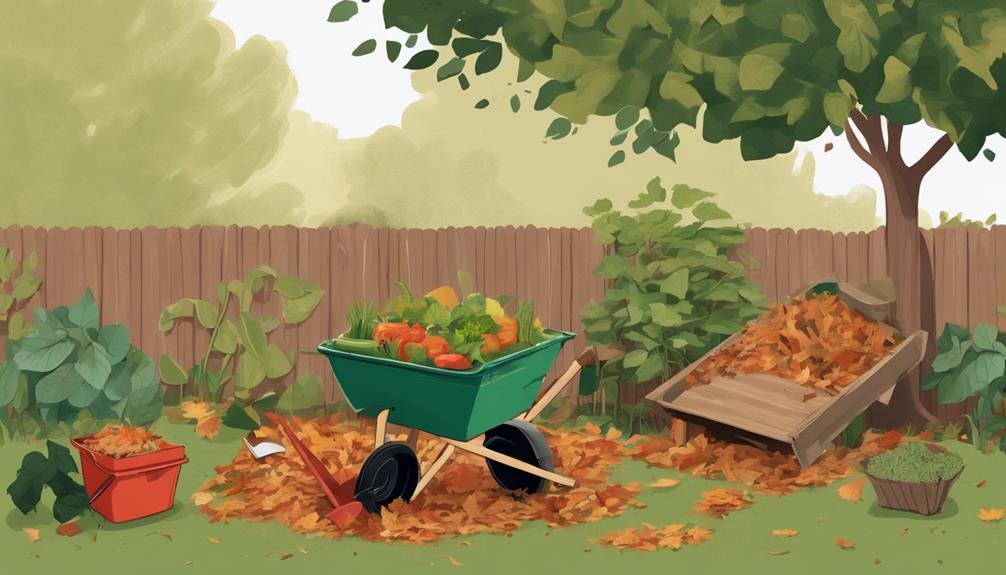
Creating a thriving home composting system starts with setting up a well-ventilated, shaded bin with easy access. Balancing 'green' and 'brown' materials is key, with green materials like food scraps providing energy for microorganisms and brown materials like yard waste offering structure. Add a 4-6 inch layer of brown materials, followed by a layer of green materials, maintaining a 2/3 brown to 1/3 green ratio. Regularly mix and maintain ideal moisture levels to foster decomposition. By following these steps, users can create a nutrient-rich compost that reduces waste and promotes a healthier environment – and that's just the beginning.
Setting Up Your Compost Bin
She selects a spot for the compost bin, ideally in a well-ventilated area with plenty of shade, close to a water source, and easily accessible for regular maintenance. This strategic location guarantees the composting process remains efficient and hassle-free. A well-placed compost bin also helps to minimize unpleasant odors and pests, keeping the surrounding area clean and tidy.
When it comes to bin aesthetics, creativity knows no bounds. A compost bin doesn't have to be an eyesore in the backyard. With a little imagination, it can become a stylish addition to the garden. Consider using a decorative screen or trellis to conceal the bin, or incorporate it into a beautiful garden bed. The bin itself can be painted or stained to match the outdoor décor, blending seamlessly into the surroundings.
Ultimately, the key to a successful composting system lies in careful planning and attention to detail. By selecting the perfect location and designing a visually appealing bin, homeowners can create an efficient and attractive composting system that benefits both the environment and their garden. With a little creativity and innovation, composting can become a seamless and enjoyable process that enhances the beauty of the backyard.
Choosing the Right Materials
With the compost bin in place, it's time to focus on the materials that will fuel the composting process. Choosing the right materials is essential for creating a thriving compost ecosystem. A good compost mix should consist of a balance of 'green' and 'brown' materials. Green materials, such as food scraps and grass clippings, are high in nitrogen and provide energy for the microorganisms. Brown materials, like leaves and twigs, are rich in carbon and provide structure for the compost pile.
When selecting materials, consider the following guidelines:
| Material Type | Examples | Benefits |
|---|---|---|
| Carbon rich sources | Dried leaves, Shredded newspaper, Cardboard | Provide structure, Absorb excess moisture |
| Nitrogen-rich materials | Food scraps, Grass clippings, Manure | Fuel microbial growth, Provide energy |
| Urban waste streams | Coffee grounds, Tea bags, Eggshells | Rich in nutrients, Add diversity to compost |
Incorporating a mix of these materials will create a nutrient-rich compost that will benefit your garden. Remember to balance your green and brown materials, and avoid adding meat, dairy, and oils to your compost pile. By choosing the right materials, you'll be well on your way to creating a thriving compost ecosystem that will nourish your plants and reduce urban waste streams.
Adding and Mixing Ingredients
Most composters start by adding a 4-6 inch layer of brown materials, such as dried leaves or shredded newspaper, to the bottom of the bin. This carbon-rich foundation provides the necessary structure for the composting process. Next, they add a layer of green materials, like food scraps or grass clippings, which are high in nitrogen. The ideal carbon-to-nitrogen ratio is 2/3 brown materials to 1/3 green materials. This balance guarantees efficient decomposition and minimizes unpleasant odors.
As the layers accumulate, it's essential to mix them regularly to maintain the most favorable moisture levels. The ideal moisture level is like a damp sponge, allowing oxygen to flow and microorganisms to thrive. If the mixture is too dry, decomposition slows; if it's too wet, anaerobic conditions can develop, leading to unpleasant odors and poor compost quality.
When adding new materials, composters should aim to sustain a consistent carbon ratio and balance the green and brown layers. This balance ensures that microorganisms have the necessary nutrients to break down organic matter efficiently. By monitoring moisture levels and maintaining the ideal carbon ratio, composters can create a thriving ecosystem that produces rich, nutrient-dense compost for their gardens.
Maintaining the Composting Process
Regularly, composters need to turn the pile every 7-10 days to ensure oxygen flows freely and microorganisms thrive. This essential step prevents anaerobic conditions, which can lead to putrid odors and an unwelcoming environment for beneficial microorganisms. By turning the pile, composters can maintain ideal moisture levels, a key factor in facilitating the decomposition process. It's vital to monitor the pile's moisture levels, ensuring it's not too dry or too wet, as this can hinder microbial activity.
Monitoring odors is another vital aspect of maintaining a healthy composting process. A well-balanced compost pile should emit an earthy, soil-like aroma. Strong, unpleasant odors can indicate an imbalance in the carbon-to-nitrogen ratio or inadequate aeration. Composters should investigate and address any issues promptly to prevent pests from being attracted to the pile. Effective pest control measures include adding a 4-6 inch layer of finished compost or worm castings to the top of the pile, which can deter pests and create an unfavorable environment for them to thrive.
Harvesting Your Compost Gold
Time-ripened compost is ready to be unearthed when it resembles a rich, dark soil with an earthy aroma, signaling the culmination of your patient efforts. After months of nurturing, it's finally time to reap the rewards of your composting endeavors. Harvesting your compost gold is an exciting milestone, marking the shift from waste to valuable resource.
As you prepare to integrate your compost into your garden or indoor plants, keep the following tips in mind:
- Test the compost quality: Before adding it to your soil, make sure your compost is free of contaminants and has a rich, earthy smell.
- Aim for a balanced mix: Combine 2/3 'brown' materials (carbon-rich) with 1/3 'green' materials (nitrogen-rich) for best compost quality.
- Monitor moisture levels: Compost should be moist, but not soggy – like a damp sponge.
- Check for pests and weeds: Remove any unwanted guests before adding compost to your soil.
- Store excess wisely: If you can't use it all at once, store excess compost in a dry, well-ventilated area to maintain its quality.
Frequently Asked Questions
Can I Compost Pet Waste, Like Dog Poop or Cat Litter?
She understands that responsible pet owners often wonder if they can compost pet waste, like dog poop or cat litter. While it may seem like a convenient solution, experts advise against it. Pet waste can harbor harmful pathogens, making it unsuitable for home composting. Instead, they recommend exploring alternative Pet Waste Disposal methods and Litter Box Management strategies that prioritize sanitation and safety.
How Do I Keep Pests, Like Rodents or Raccoons, Out of My Compost?
She knows that keeping pests out of her compost is essential. To do so, she uses secure containers with tight-fitting lids to prevent urban wildlife, like raccoons and rodents, from getting into her compost. By doing so, she guarantees her compost remains pest-free and doesn't attract unwanted visitors. Additionally, she adds a 4:1 'brown to green' ratio, which helps to reduce odors that might attract pests.
Is It Safe to Compost Food Waste With Meat, Bones, or Dairy Products?
She knows that composting food waste with meat, bones, or dairy products poses pathogen risks and nutrient imbalance concerns. Pathogens like E. coli and Salmonella can contaminate the compost, while high-nitrogen ingredients can disrupt the carbon-to-nitrogen balance, leading to unpleasant odors and attracting pests. To mitigate these risks, she can balance the green and brown materials, maintain ideal moisture and oxygen levels, and guarantee proper aeration and turning schedules.
Can I Compost Weeds With Seeds, or Will They Propagate in My Garden?
She wonders if composting weeds with seeds will spread them in her garden. It's a valid concern, as seed dispersal can be a major weed management issue. The risk is high, especially with invasive species. Composting weeds with seeds can lead to unintentional propagation, making weed management more challenging. It's best to separate weeds with seeds from the compost pile to prevent unwanted spread and maintain a healthy garden ecosystem.
How Long Does It Take for Compost to Break Down in Extreme Weather Conditions?
She wonders how long it takes for compost to break down in extreme weather conditions. In desert composting, high temperatures can accelerate decomposition, but it still takes around 2-3 months for materials to break down. On the other hand, frozen soil can slow down the process, taking up to 6-12 months. However, with the right mix of "green" and "brown" materials, composting can thrive even in harsh environments.