
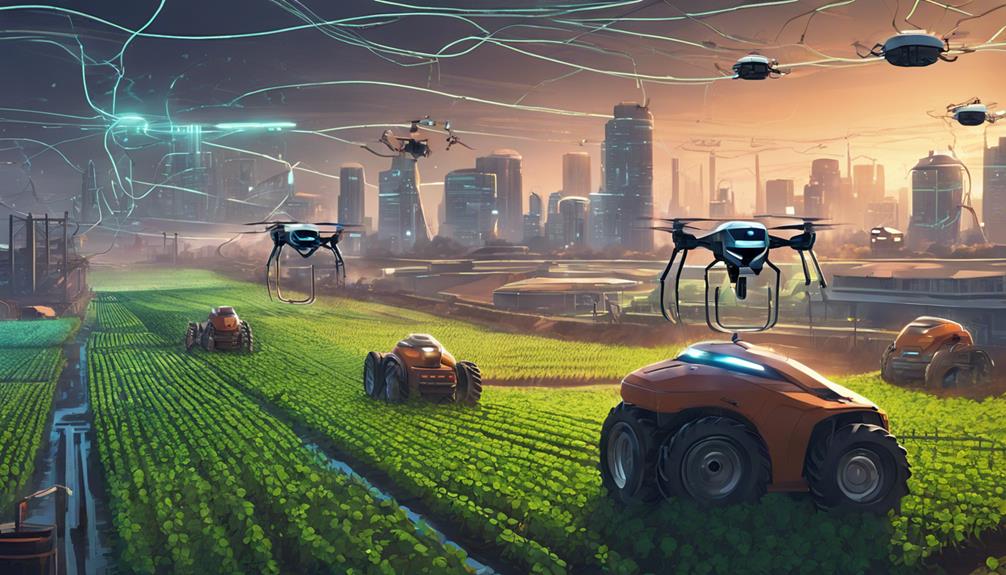
Technology is transforming the agricultural industry in profound ways, boosting crop yields, reducing waste, and promoting sustainable practices. Precision farming optimizes yields and minimizes waste, while livestock monitoring guarantees healthier animals. Vertical farming addresses food security concerns in urban areas, and agricultural drones provide real-time insights into crop health. Big data analytics and IoT sensors enable data-driven decisions, and sustainable farming practices promote eco-friendly produce. As technology continues to advance, the future of agriculture looks brighter – and the innovations have only just begun to take root.
Precision Farming for Higher Yields
By leveraging advanced technologies, precision farming enables farmers to optimize crop yields and reduce waste, thereby increasing profitability and sustainability in the agricultural industry. This innovative approach relies on precise data collection and analysis to make informed decisions about planting, irrigation, and harvesting. One important aspect of precision farming is soil mapping, which involves creating detailed maps of the soil's pH levels, nutrient content, and moisture levels. This information allows farmers to tailor their farming practices to the specific needs of each area, maximizing yields and reducing waste.
Farm robotics also plays a critical role in precision farming. Autonomous tractors and drones equipped with sensors and GPS can monitor and respond to crop conditions in real-time, ensuring timely application of fertilizers, pesticides, and water. This targeted approach minimizes the environmental impact of farming while improving crop quality and reducing costs. Additionally, advanced sensors and machine learning algorithms enable farmers to identify potential issues before they escalate, reducing the risk of crop failure and financial losses. By embracing precision farming, farmers can revolutionize their operations, increasing their bottom line while promoting sustainable agriculture practices. As the agricultural industry continues to evolve, precision farming is poised to play an essential role in shaping its future.
Livestock Monitoring for Better Health
As technology transforms the agricultural landscape, livestock monitoring emerges as a critical component of this revolution. By leveraging advanced technologies, farmers can now monitor their livestock's health in real-time, enabling them to identify potential issues before they become major problems. This proactive approach enables farmers to take swift action, ensuring the overall well-being of their animals and reducing the risk of disease outbreaks.
Early Disease Detection
Advanced sensor technologies and artificial intelligence algorithms are enabling farmers to detect diseases in livestock earlier than ever, reducing the need for antibiotics and improving overall herd health. This early detection is made possible through the integration of machine learning and plant biometrics, allowing farmers to identify subtle changes in an animal's behavior, physiology, and environment. By analyzing these complex data sets, farmers can pinpoint potential health issues before they become severe, reducing the need for antibiotics and improving overall herd health. This proactive approach not only improves animal welfare but also increases farm efficiency and productivity. With the ability to detect diseases earlier, farmers can take targeted action, reducing the economic and environmental impact of disease outbreaks. By harnessing the power of technology, farmers can create a more sustainable and resilient agricultural system, paving the way for a healthier and more prosperous future.
Real-time Health Tracking
One of the most important advantages of real-time health tracking is that it enables farmers to monitor their livestock's critical signs and behavior continuously, allowing for swift intervention at the first sign of illness. This proactive approach can greatly reduce the risk of disease outbreaks and improve overall herd health. With the help of advanced sensors and farm robotics, farmers can now track essential signs such as heart rate, temperature, and respiration rate in real-time.
| Parameter | Normal Range | Abnormal Range |
|---|---|---|
| Heart Rate | 40-60 bpm | <40 bpm or >60 bpm |
| Body Temperature | 38.5-39.5°C | <38.5°C or >39.5°C |
| Respiration Rate | 12-20 breaths/min | <12 breaths/min or >20 breaths/min |
| Herd Behavior | Normal feeding patterns | Changes in feeding patterns |
Automated Alert Systems
Automated alert systems, triggered by deviations from normal health parameters, immediately notify farmers of potential health issues, enabling prompt intervention and minimizing the risk of disease spread. These systems are instrumental in guaranteeing the health and well-being of livestock, allowing farmers to take proactive measures to prevent the spread of disease. By leveraging advanced sensors and machine learning algorithms, automated alert systems can detect even the slightest changes in an animal's behavior or essential signs, providing farmers with critical insights to make data-driven decisions.
In addition to health monitoring, automated alert systems can also be integrated with weather monitoring systems to provide farmers with timely Weather Warnings. This enables them to take necessary precautions to protect their livestock from extreme weather conditions. Farm Alerts can be set up to notify farmers of potential threats, such as flooding or heat stress, allowing them to take swift action to safeguard their animals. By harnessing the power of technology, farmers can guarantee the health and well-being of their livestock, resulting in improved productivity and profitability.
Vertical Farming for Urban Spaces
By 2050, an estimated 66% of the global population will reside in urban areas, making vertical farming an increasingly vital solution for feeding these dense populations. Urban planners are recognizing the potential of vertical farming to address food security concerns, and rooftop gardens are becoming a common sight in metropolitan areas. By leveraging underutilized urban spaces, vertical farming can provide a sustainable and efficient way to grow fresh produce for local consumption.
In vertical farming, crops are stacked in layers, often in indoor facilities, allowing for maximum yield in minimal space. This approach not only increases crop production but also reduces transportation costs and carbon emissions. Additionally, vertical farming can operate year-round, unaffected by seasonal changes or weather conditions, ensuring a consistent supply of fresh produce to urban consumers.
Urban planners are working closely with entrepreneurs and farmers to integrate vertical farming into urban landscapes. Rooftop gardens, abandoned lots, and even underground spaces are being repurposed for vertical farming. This collaboration enables cities to become more self-sufficient, reducing reliance on industrial agriculture and promoting food sovereignty.
As the global population continues to urbanize, vertical farming will play an essential role in feeding cities. By embracing this innovative approach, urban planners can create resilient, sustainable, and food-secure cities for future generations.
Agricultural Drones for Crop Management
Agricultural drones, equipped with advanced sensors and high-resolution cameras, are revolutionizing crop management by providing farmers with real-time insights into soil health, crop growth, and pest infestations. These drones can capture detailed images of fields, enabling farmers to identify issues before they escalate. With this technology, farmers can pinpoint areas of importance, detect early signs of disease, and optimize irrigation systems.
Regular drone maintenance is essential to guarantee accurate data collection and prevent equipment failure. Farmers should regularly inspect and clean drones, update software, and perform routine checks to guarantee peak performance. Additionally, adhering to aerial safety guidelines is vital to prevent accidents and ensure compliance with regulations.
Drones can also be equipped with specialized sensors to detect specific issues, such as nitrogen deficiencies or water stress. This detailed data enables farmers to make informed decisions, reducing waste and optimizing resources. By leveraging drone technology, farmers can increase yields, reduce costs, and promote sustainable agriculture practices. As the agricultural industry continues to evolve, drones will play an increasingly significant role in shaping the future of crop management.
Big Data Analytics for Informed Decisions
As farmers and agricultural businesses generate vast amounts of data from various sources, big data analytics plays an essential role in helping them make informed decisions. By leveraging advanced analytics tools, they can develop data-driven farming strategies, predict crop yields, and monitor fields in real-time. This enables them to identify areas of improvement, optimize resources, and increase overall efficiency.
Data-Driven Farming Strategies
Farmers now leverage advanced data analytics to make informed decisions, cultivating a new era of precision agriculture. By harnessing the power of big data, they can optimize crop yields, reduce waste, and streamline operations. This data-driven approach enables farmers to make precise decisions about planting, irrigation, and harvesting, resulting in increased efficiency and profitability.
Some key benefits of data-driven farming strategies include:
- Real-time monitoring: Farm Robotics equipped with sensors and GPS tracking enable farmers to monitor soil conditions, temperature, and humidity in real-time, allowing for swift responses to changing conditions.
- Data harvesting: Advanced data analytics tools help farmers collect and analyze vast amounts of data, providing valuable insights into crop performance, weather patterns, and market trends.
- Informed decision-making: By leveraging data-driven insights, farmers can make informed decisions about resource allocation, crop selection, and supply chain management, ultimately leading to increased profitability and sustainability.
Crop Yield Predictions
By analyzing vast amounts of historical climate data, weather patterns, and soil conditions, advanced algorithms can accurately predict crop yields, enabling farmers to make informed decisions about harvest planning, resource allocation, and supply chain management. With the help of big data analytics, farmers can now better anticipate and prepare for fluctuations in crop yields, minimizing potential losses and maximizing profits. Accurate crop yield predictions also enable farmers to make informed decisions about crop insurance, providing financial protection in the event of unforeseen weather events or crop failures. Weather patterns, an essential factor in crop yields, can be accurately forecasted, allowing farmers to adjust their strategies accordingly. By leveraging the power of data analytics, farmers can optimize their operations, reduce risks, and increase their bottom line. With the ability to predict crop yields, farmers can take control of their businesses, making data-driven decisions that drive growth and profitability.
Real-Time Field Monitoring
How can real-time monitoring of field conditions, soil moisture, and crop health empower farmers to respond swiftly to emerging issues and make informed decisions? The answer lies in the integration of cutting-edge technologies, such as field cameras and soil sensors, into agricultural practices. These innovative tools enable farmers to collect and analyze vast amounts of data in real-time, providing unparalleled insights into the intricacies of their fields.
With real-time monitoring, farmers can:
- Identify early signs of crop stress, allowing for prompt intervention and minimizing potential losses
- Optimize irrigation systems, reducing water waste and conserving this precious resource
- Pinpoint areas of the field requiring targeted attention, streamlining resource allocation and boosting overall efficiency
IoT Sensors for Real-time Monitoring
IoT sensors embedded in agricultural equipment and scattered throughout fields enable real-time monitoring of soil moisture, temperature, and crop health, allowing for swift data-driven decisions. This precision agriculture approach empowers farmers to respond promptly to changing conditions, minimizing waste and maximizing yields. By leveraging IoT sensors, farmers can fine-tune irrigation systems, pruning schedules, and fertilizer applications to optimize crop growth.
To guarantee accurate readings, sensor calibration is essential. Regular calibration ensures that sensor data remains reliable and consistent, providing farmers with a clear understanding of their fields. Additionally, data encryption safeguards sensitive information, protecting farmers' valuable insights from unauthorized access. This robust security measure instills confidence in the precision agriculture ecosystem, allowing farmers to focus on what matters most – cultivating a bountiful harvest.
As IoT sensors continue to revolutionize agriculture, farmers can expect increased efficiency, reduced costs, and improved crop quality. By harnessing the power of real-time monitoring, farmers can respond to emerging issues before they escalate, minimizing crop damage and ensuring a more resilient food system. With IoT sensors at the forefront of agricultural innovation, the future of farming has never looked brighter.
Sustainable Farming Practices for Future
Most farmers are now adopting sustainable farming practices to reduce environmental degradation and promote eco-friendly agriculture. This shift is essential for the future of our planet, as traditional farming methods have significant environmental impacts. By adopting sustainable practices, farmers can reduce their carbon footprint, conserve water, and promote biodiversity. Moreover, the integration of innovative farming techniques for sustainability allows farmers to optimize resource usage while enhancing soil health and crop yields. Techniques such as crop rotation, agroforestry, and precision agriculture not only minimize the use of harmful chemicals but also improve resilience against climate change. By embracing these approaches, farmers can ensure long-term viability for their operations and contribute to a healthier ecosystem for future generations.
To achieve sustainable farming, farmers are leveraging technology to:
- Implement precision agriculture: Using advanced sensors and drones to optimize crop yields, reduce waste, and minimize the use of resources.
- Adopt regenerative agriculture: Focusing on soil health, biodiversity, and ecosystem services to promote a more resilient and thriving ecosystem.
- Embrace farm-to-table practices: Connecting consumers directly with farmers, reducing transportation emissions, and promoting locally sourced produce.
These sustainable farming practices not only benefit the environment but also promote eco-friendly agriculture. By adopting these methods, farmers can increase their profitability, improve their brand reputation, and contribute to a more sustainable food system. As consumers become more environmentally conscious, the demand for sustainable and eco-friendly produce will continue to grow. By embracing sustainable farming practices, farmers can stay ahead of the curve and capitalize on this trend.
Frequently Asked Questions
How Do Farmers Ensure Data Privacy With the Use of Agricultural Technology?
Farmers safeguard sensitive information by prioritizing data privacy alongside agricultural advancements. They recognize that cybersecurity threats lurk in every digital shadow, waiting to pounce. To combat this, they employ robust data encryption methods, ensuring their valuable insights remain protected. By doing so, they maintain control over their data, shielding themselves from potential breaches and securing their agricultural future.
Can Vertical Farming Be Implemented in Areas With Limited Natural Light?
She explores the feasibility of implementing vertical farming in areas with limited natural light. While it's a challenge, it's not impossible. LED lighting can be used to supplement or even replace natural light, providing the necessary spectrum and intensity for crops to thrive. In urban farms, LED lighting is already being used to grow a wide range of crops, demonstrating its potential for successful vertical farming in low-light areas.
Are Agricultural Drones Regulated by Government Agencies?
Government agencies closely regulate agricultural drones to guarantee safe skies and efficient farming practices. Drone operators need licenses to fly, and airspace management systems track their movements. In the US, the Federal Aviation Administration (FAA) oversees drone operations, mandating registration and permits for commercial use. Strict regulations protect people and aircraft, while also promoting responsible drone use in agriculture.
How Do Iot Sensors Handle Extreme Weather Conditions?
As torrential rains pound against the earth and scorching sunbeams pierce the landscape, IoT sensors stand resilient, defying the fury of extreme weather conditions. Built with sensor durability in mind, these devices are engineered to withstand the harshest elements. Weather resistance is their forte, ensuring that critical data is transmitted uninterrupted, even in the face of hurricanes or blistering heatwaves. These robust sensors play a vital role in various sectors, including agriculture, energy management, and environmental monitoring, where accurate real-time data is essential for decision-making. Their reliability not only helps industries adapt to climate volatility, but also paves the way for innovative solutions, like the magical tech integration in education, enabling smart classrooms that adjust conditions based on environmental inputs. As a result, students can learn in an optimized atmosphere, free from the disruptions of external weather, demonstrating the transformative power of technology in shaping future learning experiences.
Are There Any Government Incentives for Adopting Sustainable Farming Practices?
Governments worldwide are incentivizing sustainable farming practices, offering attractive benefits to farmers who adopt eco-friendly methods. Tax credits and green subsidies are lucrative carrots, encouraging farmers to reduce their environmental footprint. In the US, the Farm Bill provides funding for conservation programs, while the EU's Common Agricultural Policy supports sustainable agriculture. These incentives are a win-win, promoting eco-friendly practices while boosting farmers' bottom lines.