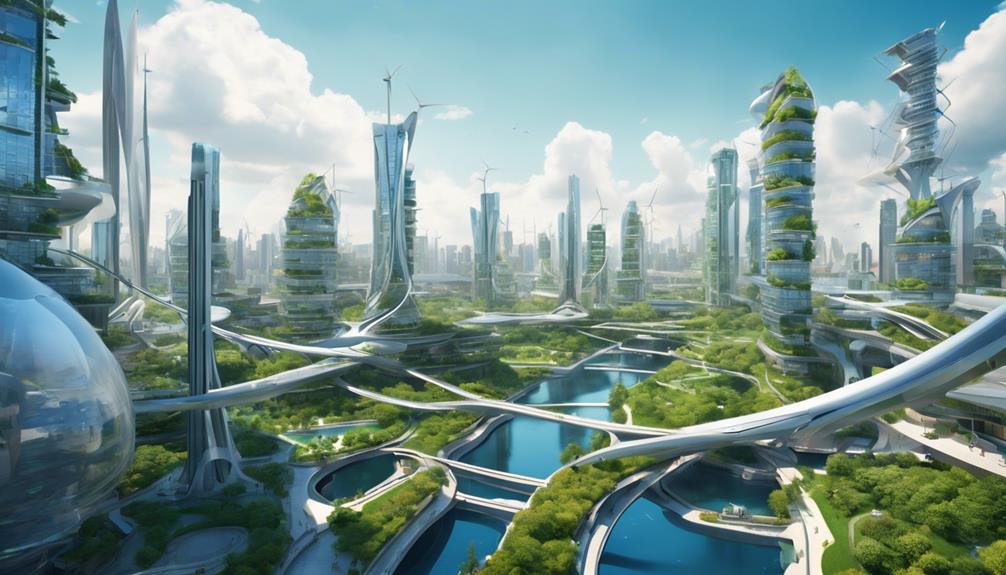
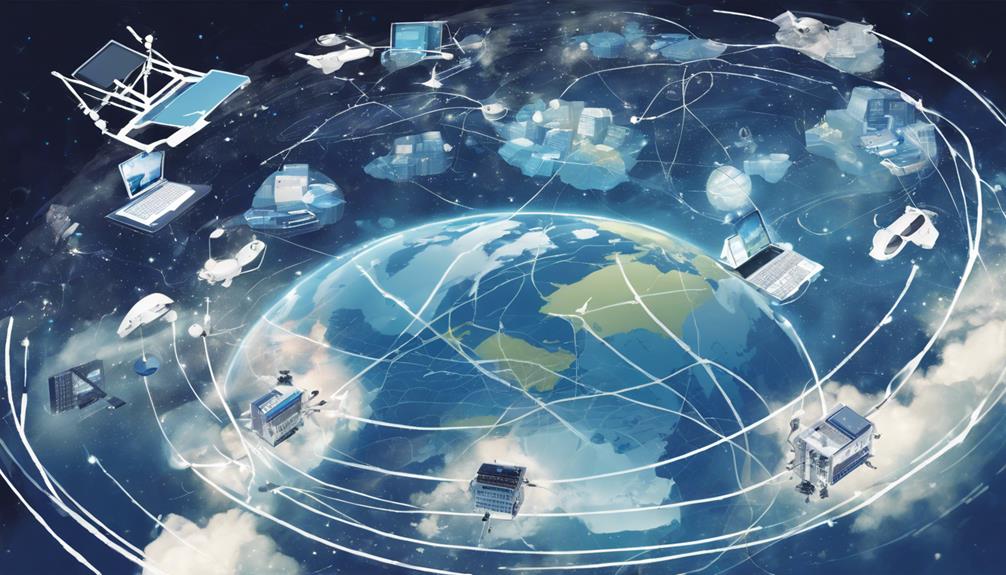
Technology plays an essential role in tracking climate change, enabling the collection and analysis of vast amounts of climate-related data. Satellite imaging and IoT sensors provide high-resolution data on climate indicators, while AI-driven climate modeling systems and machine learning aid in pattern analysis. These technological advancements have improved forecasting and early warning systems, allowing for more accurate prediction of climate-related disasters. As technology continues to evolve, its role in tackling climate change will only grow more important. By harnessing technology's potential, we can uncover new insights and drive meaningful action – and the next breakthrough might just be around the corner.
Satellite Imaging for Climate Monitoring
Satellite imaging has become an indispensable tool for climate monitoring, providing researchers with high-resolution data on climate indicators such as sea level rise, ice sheet melting, and deforestation. With the ability to capture precise images of the Earth's surface, satellite imaging has revolutionized the way scientists track climate change. High-resolution images enable researchers to detect subtle changes in land surfaces, allowing for accurate land surveys and monitoring of environmental changes.
The image resolution provided by satellite imaging is unparalleled, enabling researchers to pinpoint specific areas of concern. For instance, high-resolution images can detect deforestation patterns, allowing policymakers to identify areas that require conservation efforts. Additionally, satellite imaging can track changes in ice sheet coverage, providing valuable insights into the impact of climate change on polar regions.
The application of satellite imaging in climate monitoring extends beyond land surveys. It can also track changes in ocean currents, sea surface temperature, and ocean acidification. This extensive data enables researchers to develop accurate climate models, informing policymakers of the most effective strategies to mitigate the effects of climate change. As the importance of climate monitoring continues to grow, satellite imaging is poised to remain an essential tool in the fight against climate change.
IoT Sensors for Environmental Data
How can IoT sensors, scattered across the globe, provide real-time environmental data to combat climate change? These sensors, connected through wireless networks, can monitor various environmental parameters, such as temperature, humidity, and air quality. The data collected is transmitted in real-time, enabling scientists to track climate patterns and make informed decisions.
| Parameter | Sensor Type | Accuracy |
|---|---|---|
| Temperature | Thermocouple | ±0.1°C |
| Humidity | Hygrometer | ±2% RH |
| Air Quality | Gas Sensor | ±5 ppb |
Proper sensor calibration is essential to ensure the accuracy of the collected data. IoT sensors can be calibrated using standardized protocols, ensuring consistency across different locations. This data can be used to identify areas of high pollution, enabling targeted interventions to mitigate climate change.
The widespread deployment of IoT sensors can provide a granular understanding of environmental changes, enabling data-driven decision-making. By leveraging IoT sensors, scientists can track climate patterns, identify areas of high risk, and develop targeted interventions to combat climate change. As the global IoT sensor network continues to expand, the potential for real-time environmental monitoring and data-driven decision-making will only continue to grow.
AI-Driven Climate Modeling Systems
By integrating IoT sensor data with AI-driven climate modeling systems, researchers can now create highly accurate, localized climate models that predict weather patterns and identify areas prone to climate-related disasters. This fusion of technologies enables scientists to better understand the complexities of climate change and make more informed decisions.
- Scalability: Cloud computing has revolutionized the field of climate modeling by providing the necessary infrastructure to process massive amounts of data. This scalability allows researchers to run complex simulations and analyze vast amounts of data in a fraction of the time it would take with traditional computing methods.
- Algorithmic Complexity: AI-driven climate models can tackle the intricate relationships between atmospheric, oceanic, and terrestrial systems, allowing for more accurate predictions of climate phenomena. These models can also adapt to new data, refining their predictions over time.
- Real-time Insights: With AI-driven climate modeling systems, researchers can gain real-time insights into climate patterns, enabling them to issue timely warnings for extreme weather events and inform policymakers on effective climate change mitigation strategies.
Machine Learning for Pattern Analysis
Machine learning algorithms are being utilized to analyze vast amounts of climate data, enabling researchers to identify complex patterns and trends that may have gone unnoticed otherwise. By leveraging data visualization tools, scientists can now effectively communicate their findings to a broader audience, facilitating a deeper understanding of climate change. Through machine learning-based pattern detection, researchers can pinpoint areas of significant climate change activity, informing targeted mitigation strategies.
Data Visualization Tools
Researchers leverage data visualization tools to uncover hidden patterns in climate data, revealing intricate relationships that would otherwise remain obscured. By utilizing interactive dashboards, scientists can create immersive experiences that facilitate deeper understanding of complex climate phenomena. For instance, virtual reality can be employed to simulate the impacts of rising sea levels or intense storms, enabling policymakers to make more informed decisions.
To further enhance data analysis, researchers employ the following techniques:
- Dimensionality reduction: This method reduces complex data sets into manageable, visualizable formats, allowing researchers to identify correlations and trends that may have gone unnoticed.
- Geospatial visualization: By mapping climate data onto geographic coordinates, researchers can identify regional patterns and anomalies, informing targeted conservation efforts.
- Real-time monitoring: Interactive dashboards enable scientists to track climate indicators in real-time, enabling swift responses to emerging trends or anomalies.
Climate Pattern Detection
Since the 1980s, climate scientists have been developing sophisticated machine learning algorithms to uncover complex patterns in climate data, allowing them to identify early warning signs of climate shifts and make more accurate predictions. These algorithms are designed to detect subtle changes in climate indicators, such as temperature, sea level, and ice sheet coverage. By analyzing these indicators, scientists can identify patterns that may signal weather extremes, such as intense hurricanes or droughts.
| Climate Indicator | Pattern Detection | Weather Extremes |
|---|---|---|
| Temperature | Increasing trend | Heatwaves, Wildfires |
| Sea Level | Accelerating rise | Coastal Flooding, Erosion |
| Ice Sheet Coverage | Rapid decline | Sea Level Rise, Ocean Current Disruption |
Machine learning algorithms can also identify complex patterns in climate data that may not be immediately apparent to human analysts. For instance, they can detect correlations between climate indicators and weather extremes, allowing scientists to make more accurate predictions about future climate shifts. By leveraging machine learning for pattern analysis, scientists can gain a deeper understanding of climate patterns and make more informed decisions about mitigating the impacts of climate change.
Predicting Climate-Related Disasters
As the world grapples with the escalating threat of climate-related disasters, technology is playing a vital role in predicting and preventing these catastrophes. By leveraging early warning systems, real-time data analysis, and risk assessment models, scientists can identify potential hotspots and alert communities at risk. This proactive approach enables authorities to take swift action, saving lives and reducing the devastating impact of natural disasters.
Early Warning Systems
Advanced computer models and satellite imaging enable early warning systems to accurately predict climate-related disasters, such as hurricanes, wildfires, and floods, by detecting subtle changes in environmental conditions. These systems play a crucial role in saving lives and minimizing damage to infrastructure. By providing timely warnings, early warning systems facilitate community engagement and disaster preparedness.
For instance, in the face of an impending hurricane, early warning systems can:
- Alert residents to evacuate or take necessary precautions, ensuring their safety.
- Mobilize emergency responders, enabling them to respond quickly and effectively.
- Inform infrastructure management, allowing them to take proactive measures to mitigate damage.
Real-time Data Analysis
By leveraging real-time data from a network of sensors, satellites, and drones, researchers can now analyze environmental patterns to predict climate-related disasters with unprecedented accuracy. This is made possible by the ability to process vast amounts of data in real-time, thanks to advancements in cloud scalability. With cloud-based infrastructure, researchers can quickly scale up or down to handle large datasets, guaranteeing that critical insights aren't delayed by processing bottlenecks. This rapid analysis enables the identification of early warning signs, allowing for timely evacuations and mitigating the impact of natural disasters. Additionally, reduced data latency ensures that researchers can respond swiftly to emerging trends, making it possible to issue timely warnings and save lives. By harnessing the power of real-time data analysis, scientists can better understand the complexities of climate change, ultimately leading to more effective disaster preparedness and response strategies. As the frequency and severity of climate-related disasters continue to rise, the importance of real-time data analysis in predicting and mitigating these events cannot be overstated.
Risk Assessment Models
Scientists develop sophisticated risk assessment models to predict climate-related disasters, integrating real-time data with historical records and statistical analysis to identify high-risk areas and vulnerable populations. These models enable policymakers and emergency responders to take proactive measures, saving lives and reducing damages. However, climate uncertainties and model limitations can affect the accuracy of these predictions.
To improve the reliability of risk assessment models, scientists are working to:
- Enhance data quality: Incorporating diverse data sources, such as satellite imagery and sensor data, to reduce uncertainties.
- Refine model parameters: Continuously updating models with new data to improve their predictive power.
- Account for model limitations: Recognizing the limitations of current models and developing new approaches to address these gaps.
Climate Data Visualization Tools
Climate data visualization tools are essential for researchers to transform complex climate models and datasets into intuitive, interactive, and easily shareable visual representations. By leveraging these tools, scientists can uncover hidden patterns, identify trends, and convey critical insights to stakeholders. Effective data visualization is vital in climate research, as it enables data storytelling – the process of conveying complex data insights through compelling narratives. This approach facilitates a deeper understanding of climate phenomena, fostering informed decision-making and policy development.
Virtual globes, a type of climate data visualization tool, have revolutionized the field. These interactive, 3D representations of the Earth's surface enable researchers to analyze and visualize climate data in a geospatial context. By integrating virtual globes with other visualization tools, researchers can create immersive, interactive experiences that simulate the impacts of climate change on ecosystems, infrastructure, and human populations. This fusion of data and visual storytelling enables researchers to distill complex climate data into actionable insights, empowering policymakers, businesses, and individuals to make informed decisions about climate resilience and sustainability. As the volume and complexity of climate data continue to grow, the importance of innovative data visualization tools will only continue to increase, driving breakthroughs in climate research and mitigation strategies.
Advanced Weather Forecasting Systems
Leveraging advanced computing power and sophisticated algorithms, advanced weather forecasting systems accurately predict weather patterns and storms, enabling timely warnings and evacuations. These systems have revolutionized the field of meteorology, allowing for more precise and reliable forecasts. One of the key components of advanced weather forecasting systems is weather radar, which uses Doppler radar technology to detect even slight changes in weather patterns.
The accuracy of these systems is unparalleled, with forecast accuracy improving by the day. In fact, studies have shown that advanced weather forecasting systems can predict weather patterns with an accuracy of up to 90%. This is a significant improvement from traditional forecasting methods, which often relied on manual observations and simple algorithms.
Some of the key benefits of advanced weather forecasting systems include:
- Enhanced public safety: Timely warnings and evacuations can save countless lives and prevent property damage.
- Improved resource allocation: Accurate forecasts enable authorities to allocate resources more effectively, reducing waste and improving response times.
- Increased economic efficiency: Advanced weather forecasting systems can help industries such as agriculture, aviation, and transportation make informed decisions, reducing losses and improving productivity.
Climate Change Impact Assessment
As global temperatures continue to rise, researchers are working tirelessly to quantify the devastating impact of climate change on ecosystems and human societies. Climate change impact evaluation is an essential step in understanding the far-reaching consequences of this global phenomenon. By analyzing the effects of climate change, scientists can identify vulnerable regions, ecosystems, and populations, enabling targeted interventions to mitigate its impacts.
Vulnerability analysis plays a pivotal role in climate change impact evaluation. This involves evaluating the susceptibility of different systems to climate-related stresses, such as sea-level rise, droughts, and heatwaves. By pinpointing areas of high vulnerability, policymakers can prioritize adaptation efforts and allocate resources more effectively.
Moreover, gauging the carbon footprint of various sectors, such as transportation and agriculture, is essential for developing strategies to reduce greenhouse gas emissions. This involves quantifying the amount of CO2 and other pollutants released into the atmosphere, allowing for the identification of high-emitting activities and the development of targeted reduction strategies. Furthermore, as the digital landscape continues to expand, it is crucial to also consider how to reduce digital carbon emissions associated with technology infrastructure and online activities. By analyzing energy consumption patterns in data centers and streaming services, we can create initiatives to minimize their environmental impact. Ultimately, a comprehensive approach that encompasses both physical and digital sectors will enhance our ability to mitigate climate change effectively.
Technology is revolutionizing climate change impact evaluation by providing innovative tools and methods for data collection, analysis, and visualization. For instance, remote sensing technologies, such as satellite imaging, enable the monitoring of environmental changes over time, while artificial intelligence can help analyze large datasets to identify patterns and trends. By leveraging these technologies, researchers can gain a deeper understanding of climate change impacts and develop more effective strategies for mitigation and adaptation.
Technology-Driven Climate Policy
Researchers are now harnessing the power of technology to inform and drive climate policy, using data-driven insights to shape effective regulations and mitigation strategies. This shift towards technology-driven climate policy is essential, as it enables policymakers to make informed decisions backed by empirical evidence.
- Data Analytics: Advanced data analytics platforms are being utilized to process vast amounts of climate-related data, providing policymakers with actionable insights to develop targeted climate policies.
- Carbon Pricing: Technology is facilitating the implementation of carbon pricing mechanisms, which are vital in reducing greenhouse gas emissions and promoting sustainable practices. Digital platforms are streamlining the process of tracking and trading carbon credits, ensuring transparency and accountability.
- Green Infrastructure: Technology is also driving the development of green infrastructure, such as smart grids and sustainable transportation systems. These innovations are critical in reducing urban carbon footprints and promoting eco-friendly urban planning.
Frequently Asked Questions
Can Technology Replace Human Observation in Climate Change Research?
As the curious traveler ventures into the uncharted territory of climate research, she finds herself at a crossroads: can technology replace human observation? The answer lies in the shadows of Data Quality. While machines can collect vast amounts of data, they lack the Human Insight to discern subtle patterns and nuances. It's like relying solely on a map to navigate a labyrinth – one needs the wisdom of a seasoned guide to reveal its secrets.
How Do Iot Sensors Handle Extreme Environmental Conditions?
She designs IoT sensors to brave extreme environmental conditions. To guarantee accuracy, she prioritizes sensor calibration, ensuring precise readings even in harsh temperatures and humidity. Environmental durability is key, so she selects rugged materials and clever designs that can withstand the elements. By pushing innovation boundaries, her sensors can thrive in the most inhospitable climates, providing reliable data that fuels groundbreaking research.
Can Ai-Driven Models Predict Climate Change Consequences With Certainty?
She notes that AI-driven models can predict climate change consequences with a degree of certainty, but it's important to acknowledge the limitations. Machine learning algorithms rely on high-quality data, and uncertainties arise from noisy or incomplete data. To build trust, uncertainty quantification and model validation are essential. By refining data quality and accounting for uncertainty, AI models can provide more accurate predictions, ultimately informing climate change mitigation strategies.
Are Climate Data Visualization Tools Accessible to Non-Technical Users?
"A picture is worth a thousand words," and when it comes to climate data visualization, accessibility is key. Fortunately, many climate data visualization tools are designed with non-technical users in mind, prioritizing user experience and data literacy. By providing intuitive interfaces and clear visualizations, these tools empower users to easily understand and engage with complex climate data, fostering a more informed and proactive approach to addressing climate change.
Can Technology-Driven Climate Policies Be Implemented Globally?
She believes that technology-driven climate policies can be implemented globally, but it requires Global Coordination and a unified Regulatory Framework. Governments and industries must collaborate to establish standardized protocols, ensuring a cohesive approach to mitigating climate change. With a harmonized framework, innovation can thrive, and scalable solutions can be developed to tackle this pressing issue. By working together, the world can create a sustainable future.