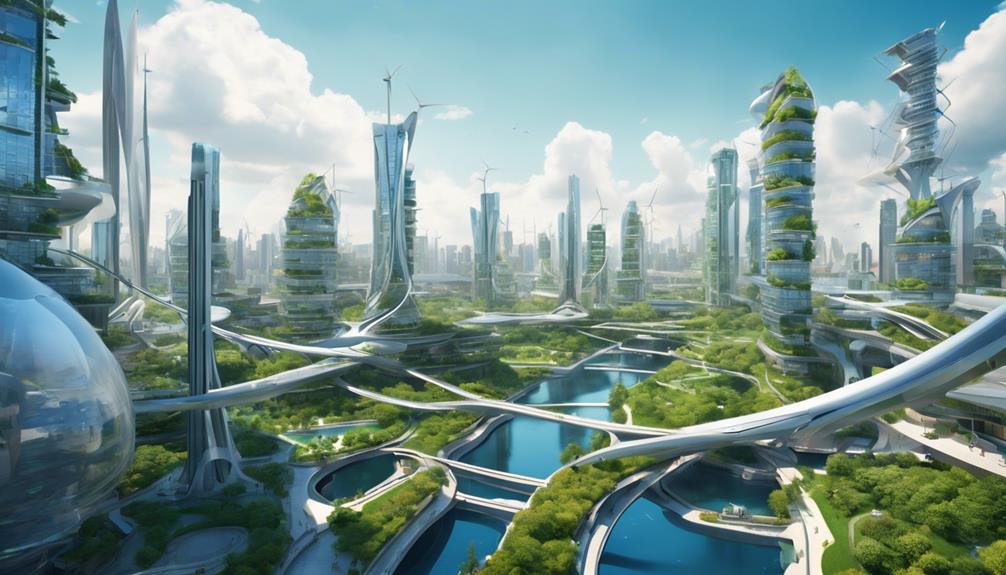
Designing cities for climate resilience is vital as urban populations grow and climate-related disasters intensify. Effective governance, prioritizing resilience and adaptability, is key to addressing the displacements and disruptions caused by climate change. Green infrastructure, restored ecosystems, and sustainable water management strategies can mitigate flood risks and the urban heat island effect. Climate-resilient neighborhoods, built with community engagement and social equity, can reduce vulnerabilities. Innovative materials and technologies, like self-healing concrete and green roofs, can further enhance resilience. As cities continue to face unprecedented climate challenges, innovative design and planning strategies will be essential for building a more resilient urban future ahead.
Urban Planning for Climate Change
As cities face unprecedented climate-related challenges, urban planners must rethink traditional design approaches to prioritize resilience and adaptability in the face of rising global temperatures. The consequences of inaction are dire, with climate migration becoming a harsh reality for many urban dwellers. It's estimated that by 2050, over 143 million people will be displaced due to climate change, placing immense pressure on urban infrastructure and governance.
Urban governance plays a critical role in mitigating the effects of climate change. Effective governance structures can facilitate collaboration between stakeholders, ensuring that climate resilience is integrated into urban planning and policy-making. This includes implementing adaptive management strategies, investing in climate-resilient infrastructure, and promoting sustainable urban development.
To address climate migration, urban planners must prioritize inclusive and equitable urban design. This involves creating resilient neighborhoods that can accommodate growing populations, while also providing essential services and amenities. By adopting a people-centered approach, cities can reduce the vulnerability of climate migrants and foster more resilient communities.
Innovative urban planning can help cities stay ahead of the climate curve. By embracing cutting-edge technologies and data-driven approaches, urban planners can develop targeted interventions that address the unique needs of their cities. As the world grapples with the complexities of climate change, it's clear that urban planning will play a critical role in shaping the future of our cities.
Green Infrastructure and Ecosystems
As cities face increasing climate-related challenges, incorporating green infrastructure and ecosystems becomes essential for resilience. By restoring urban ecosystems, cities can mitigate the effects of climate change, and nature-based flood control measures can help reduce the risk of flooding. These innovative approaches can help cities adapt to a changing climate and provide a sustainable future for residents.
Urban Ecosystem Restoration
Cities can greatly enhance their climate resilience by restoring degraded ecosystems and integrating green infrastructure into their urban planning, which not only helps to mitigate the urban heat island effect but also improves air and water quality. This approach can greatly enhance urban biodiversity, as restored ecosystems provide habitats for various plant and animal species. In addition, ecological connectivity is promoted, allowing species to migrate and interact, thereby maintaining healthy ecosystem functions. Green corridors, parks, and gardens can be designed to connect fragmented habitats, creating a network of ecological pathways. This, in turn, supports urban biodiversity and improves ecosystem services. By incorporating green infrastructure into urban planning, cities can reduce the urban heat island effect, manage stormwater runoff, and improve air quality, ultimately enhancing the overall resilience of the urban environment. By embracing urban ecosystem restoration, cities can create a more sustainable, livable, and climate-resilient future for their inhabitants.
Nature-Based Flood Control
By harnessing the natural flood-mitigating capabilities of ecosystems, urban planners can design green infrastructure that effectively reduces the risk of flooding in urban areas. Nature-based flood control measures, such as wetland restoration and coastal protection, are increasingly being recognized as vital components of resilient urban design. These solutions not only mitigate flood risk but also provide numerous co-benefits, including improved water quality, enhanced biodiversity, and increased recreational spaces.
In coastal cities, restoring natural barriers like dunes and mangroves can provide effective protection against storm surges and sea-level rise. Similarly, inland cities can benefit from restored wetlands, which can absorb excess rainfall and reduce flood peaks. By incorporating nature-based solutions into urban planning, cities can reduce their reliance on traditional grey infrastructure and create more sustainable, resilient, and livable environments. By embracing these innovative approaches, cities can stay ahead of the curve in the face of climate change, protecting both people and the planet.
Building Climate Resilient Neighborhoods
Neighborhoods can be designed to anticipate and respond to climate-related disruptions, providing a foundation for community resilience. By incorporating green infrastructure, such as parks and green roofs, neighborhoods can mitigate the urban heat island effect and reduce flood risk. This approach not only enhances environmental sustainability but also fosters community engagement and social equity.
Community engagement is vital in building climate-resilient neighborhoods. Residents must be involved in the planning and design process to make sure that their needs and concerns are addressed. This can be achieved through participatory budgeting, community workshops, and other inclusive decision-making processes. By empowering residents, neighborhoods can become more resilient and adaptable to climate-related challenges.
Social equity is also an important consideration in building climate-resilient neighborhoods. Vulnerable populations, such as low-income communities and communities of color, are often disproportionately affected by climate-related disasters. By prioritizing their needs and incorporating equitable design principles, neighborhoods can reduce social and economic vulnerabilities. This includes providing affordable housing, accessible green spaces, and community facilities that promote social cohesion and resilience.
Sustainable Urban Water Management
Cities can greatly reduce their water footprint by implementing sustainable urban water management strategies. One effective approach is to harness rainwater through harvesting systems, which can supply non-potable water for various urban uses. Additionally, stormwater management strategies can mitigate urban flooding and prevent pollutants from entering waterways.
Rainwater Harvesting Systems
Rainwater harvesting systems play an essential role in sustainable urban water management, as they reduce the strain on municipal water supplies and mitigate the risk of urban flooding. By collecting and storing rainwater, cities can conserve water and decrease their reliance on potable water sources. Rooftop collection systems, in particular, offer a unique opportunity for water conservation. These systems involve collecting rainwater from rooftops and storing it in tanks or cisterns for later use.
| System Component | Description | Benefits |
|---|---|---|
| Rooftop Collection | Collects rainwater from rooftops | Reduces stormwater runoff, conserves water |
| Gutters and Downspouts | Directs rainwater to storage tanks | Efficient collection, reduces erosion |
| Storage Tanks | Holds collected rainwater for later use | Reduces municipal water demand, decreases flooding |
| Treatment Systems | Removes contaminants, sediment, and debris | Ensures safe water quality for non-potable uses |
| Distribution Systems | Supplies harvested water to end-users | Supports irrigation, toilet flushing, and washing machines |
Stormwater Management Strategies
As rainwater harvesting systems help mitigate urban flooding, effective stormwater management strategies are also necessary to prevent combined sewer overflows and promote sustainable urban water management. Cities can adopt innovative approaches to manage stormwater runoff, reducing the burden on traditional drainage systems. Permeable pavements, for instance, allow rainwater to infiltrate the soil, decreasing surface runoff and filtering pollutants from the water. These pavements can be integrated into urban design, creating green infrastructure that enhances urban aesthetics while mitigating flood risk. Water-sensitive urban design principles can also guide city planning, prioritizing natural drainage patterns and preserving natural habitats. By adopting these strategies, cities can reduce the pressure on aging infrastructure, minimize flood risks, and create more resilient urban environments. Effective stormwater management is critical to designing cities that thrive in the face of climate change, and innovative solutions can help cities adapt and flourish.
Climate-Resilient Transportation Systems
At least 70% of the world's transportation infrastructure is located in coastal areas, making it vulnerable to rising sea levels and increased flooding. Climate-resilient transportation systems are vital to guarantee the safety and mobility of citizens in the face of climate change. One key strategy is to promote the adoption of Electric Vehicles (EVs), which can reduce greenhouse gas emissions and improve air quality. Additionally, Smart Signals can optimize traffic flow, reducing congestion and decreasing travel times.
| Strategy | Benefits | Implementation |
|---|---|---|
| Electric Vehicles | Reduce greenhouse gas emissions, Improve air quality | Incentivize EV adoption through tax credits, Invest in EV charging infrastructure |
| Smart Signals | Optimize traffic flow, Reduce congestion | Install intelligent traffic management systems, Integrate with public transit systems |
| Flood-Resistant Infrastructure | Protect transportation infrastructure from flooding | Design elevated roads and bridges, Implement flood-resistant materials |
Cities can also invest in flood-resistant infrastructure, such as elevated roads and bridges, to safeguard transportation systems from flooding. By adopting these strategies, cities can build more resilient transportation systems that can withstand the impacts of climate change.
Innovative Materials and Technologies
Cities are leveraging innovative materials and technologies to enhance the resilience of their infrastructure, moving beyond traditional construction methods to create adaptive and sustainable urban ecosystems. One such innovation is Smart Concrete, a self-healing material that can repair cracks and damages autonomously, reducing maintenance costs and increasing the lifespan of buildings and infrastructure. This cutting-edge technology has the potential to revolutionize the construction industry, enabling cities to build stronger, more durable structures that can withstand the impacts of climate change.
Another key innovation is the integration of Green Roofs into urban design. These vegetated roofs provide insulation, reduce stormwater runoff, and create habitats for urban wildlife, all while mitigating the urban heat island effect. By incorporating green spaces into building design, cities can improve air quality, reduce energy consumption, and enhance the overall quality of life for citizens. Moreover, Green Roofs can be designed to absorb and filter rainwater, reducing the burden on drainage systems and preventing combined sewer overflows.
As cities continue to adapt to the challenges of climate change, innovative materials and technologies will play a critical role in enhancing resilience and sustainability. By embracing these cutting-edge solutions, cities can create more livable, sustainable, and resilient urban environments that support the well-being of both citizens and the planet.
Frequently Asked Questions
How Do Cities Balance Climate Resilience With Economic Development Goals?
As cities work towards balancing climate resilience with economic development goals, they face a critical dilemma. Can they afford to invest in infrastructure that protects against rising temperatures and extreme weather events, or will it stifle growth? Incorporating green spaces into urban planning can help mitigate the effects of climate change while also boosting local economies. By prioritizing resilient infrastructure, cities can reduce long-term infrastructure costs and foster sustainable development that benefits both people and the planet.
What Role Do Community Engagement and Education Play in Resilience Efforts?
She believes community engagement and education are essential in resilience efforts. Through participatory planning, citizens can contribute to climate-resilient urban development. Climate literacy programs empower communities to make informed decisions, fostering a sense of ownership and responsibility. By educating citizens on climate risks and adaptation strategies, cities can build a resilient, climate-literate population, driving innovative solutions and collaborative problem-solving.
Can Existing Cities Be Retrofitted for Climate Resilience, or Only New Ones?
Can we retrofit existing cities for climate resilience, or are we doomed to start from scratch? The notion that we can't teach an old city new tricks is, quite frankly, a bunch of hooey. With urban renewal and infrastructure revamp, even the oldest of cities can be revamped to withstand the wrath of climate change. It's time to stop making excuses and get to work – after all, Rome wasn't built in a day, but it can be rebuilt for a more resilient tomorrow.
How Do Cities Measure and Track the Effectiveness of Resilience Strategies?
Cities grapple with measuring the effectiveness of resilience strategies, seeking innovative solutions. They leverage data visualization to communicate complex performance metrics, making progress tangible. By tracking key indicators, such as flood risk reduction or greenhouse gas emissions, cities can refine their approaches. Effective measurement enables data-driven decision-making, allowing cities to adapt and strengthen their resilience.
What Is the Cost-Benefit Analysis of Investing in Climate Resilience Measures?
As the old adage goes, "an ounce of prevention is worth a pound of cure." When it comes to investing in climate resilience measures, cities must weigh the costs against the benefits. A thorough cost-benefit analysis reveals that flood protection measures, for instance, can yield significant economic benefits, such as reduced damage to infrastructure and increased property values. By investing in resilience, cities can save millions in the long run, making it a wise investment for a sustainable future.