
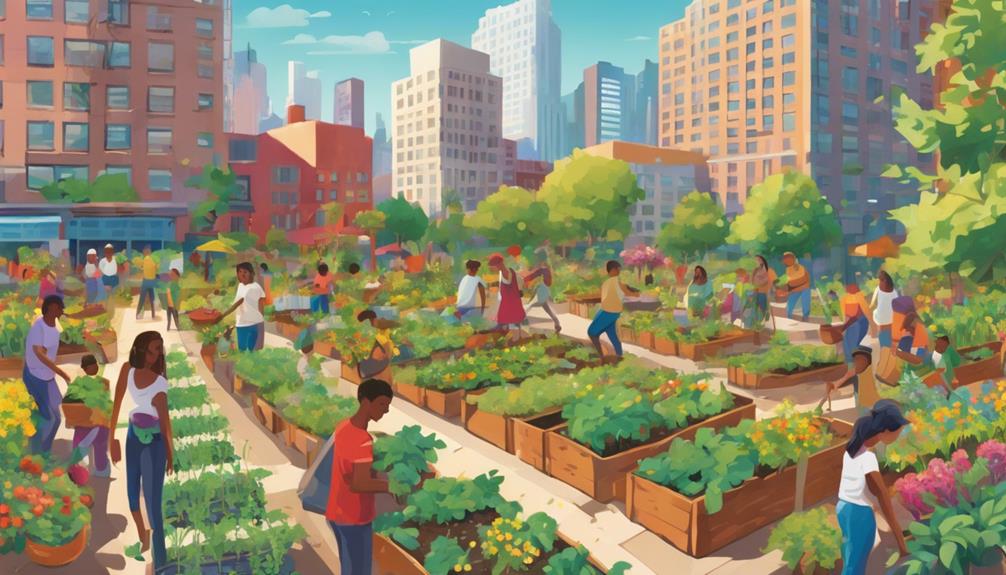
Community gardens in urban areas serve as green oases, mitigating the urban heat island effect and promoting environmental stewardship. They integrate urban forestry initiatives, incorporate innovative designs, and enhance food security by providing access to fresh produce. Community engagement flourishes through shared spaces, socialization, and cultural exchange. These gardens also serve as environmental education hubs, promoting eco-friendly behaviors and climate literacy. As vibrant spaces, they revitalize neighborhoods and foster a sense of community. By exploring the multifaceted role of community gardens, one can uncover the full potential of these urban gems and discover how they can transform cities for the better.
Green Oases in Urban Landscapes
In the midst of concrete jungles, community gardens burst forth as green oases, providing a tranquil escape from the hustle and bustle of urban life. These urban havens not only purify the air and mitigate the urban heat island effect but also serve as a canvas for eco-artistry. Urban forestry initiatives, which involve the cultivation and management of trees in urban areas, are often integrated into community gardens. This synergy enables the creation of lush, verdant spaces that double as natural air filters and noise buffers.
As urban dwellers increasingly crave connections with nature, community gardens have evolved into vibrant hubs where eco-artistry meets urban forestry. Innovative garden designs often incorporate native plant species, rainwater harvesting systems, and composting facilities, showcasing the intersection of art and sustainability. By merging eco-artistry with urban forestry, community gardens have become dynamic, interactive spaces that inspire environmental stewardship and community engagement. These green oases not only beautify urban landscapes but also foster a sense of community, creativity, and innovation, making them a crucial component of sustainable urban planning. As urbanization continues to intensify, the significance of community gardens as green oases will only continue to grow, providing a revitalizing presence in the midst of concrete jungles.
Fostering Community Engagement
By providing a shared space for community members to collaborate and socialize, community gardens foster a sense of community and promote collective ownership of green spaces. This, in turn, encourages community engagement, which is essential for the success of urban gardens. As community members work together, they build relationships, share knowledge, and develop a sense of trust, ultimately leading to a stronger, more cohesive community.
Community gardens also play an important role in neighborhood revitalization. By transforming vacant or underutilized spaces into vibrant gardens, these initiatives help to revitalize neighborhoods, increase property values, and promote a sense of pride among residents. Additionally, community gardens provide a platform for cultural exchange, where people from diverse backgrounds come together to share their experiences, traditions, and knowledge. This exchange helps to break down cultural barriers, promote understanding, and foster a sense of community.
Here are some ways community gardens foster community engagement:
- Volunteer opportunities: Community gardens rely on volunteers to maintain and manage the garden, providing opportunities for community members to get involved and make a difference.
- Community events: Gardens often host events, such as workshops, festivals, and potlucks, which bring the community together and promote socialization.
- Collaborative decision-making: Community gardens encourage collective decision-making, ensuring that everyone has a say in the garden's development and maintenance.
Urban Agriculture and Food Security
Urban gardens play a vital role in enhancing food security by providing local residents with access to fresh, nutritious produce, thereby reducing reliance on industrial agriculture and transportation networks. This is particularly important in urban areas where food deserts are prevalent, and residents lack access to healthy, affordable food options. Urban farming initiatives, such as community gardens, help fill this gap by providing fresh produce to local communities. By doing so, they improve food security, particularly for low-income households and marginalized communities.
Moreover, community gardens promote sustainable urban agriculture practices, which reduce the carbon footprint associated with industrial agriculture. They also provide an opportunity for residents to engage in urban farming, fostering a sense of community and ownership over food production. This, in turn, helps build resilience in urban food systems, making them more adaptable to climate change and other disruptions. By supporting urban agriculture initiatives, cities can improve food security, enhance community well-being, and promote sustainable development. As urban populations continue to grow, the role of community gardens in enhancing food security will become increasingly important. By investing in urban farming initiatives, cities can create healthier, more sustainable, and more resilient food systems.
Environmental Education Hubs
Community gardens in urban areas can serve as environmental education hubs, providing a unique opportunity to create green spaces that foster hands-on learning experiences. These hubs can offer models of environmental stewardship, showcasing sustainable practices and promoting eco-friendly behaviors. By integrating green space creation, hands-on learning tools, and environmental stewardship models, community gardens can inspire a new generation of environmental leaders.
Green Space Creation
Incorporating green spaces into urban landscapes, city planners and residents are transforming abandoned lots and rooftops into thriving environmental education hubs. These green spaces not only provide a peaceful oasis in the midst of bustling cities but also serve as outdoor classrooms, promoting environmental literacy and community engagement. By combining urban planning and landscape architecture, these hubs are designed to foster a deeper understanding of sustainable practices and ecological principles.
Here are just a few ways green space creation is making a positive impact:
- Urban heat island mitigation: Green spaces help reduce the urban heat island effect by providing shade, cooling the air through evapotranspiration, and reducing the need for air conditioning.
- Stormwater management: Green infrastructure, such as green roofs and rain gardens, helps manage stormwater runoff, reducing the burden on municipal drainage systems.
- Community building: Green spaces serve as community gathering spaces, fostering social connections and a sense of community among residents.
Hands-On Learning Tools
Over 75% of environmental education hubs incorporate hands-on learning tools, empowering residents to become active stewards of their environment. These innovative hubs offer a range of interactive experiences, fostering a deeper understanding of urban ecology and sustainability. One such tool is gardening simulations, which allow individuals to explore the intricacies of urban agriculture in a controlled environment. Participants can experiment with different crop rotations, soil compositions, and irrigation systems, gaining valuable insights into the complexities of urban food production.
Science experiments are another key component of these hands-on learning tools. Residents can engage in experiments that demonstrate the impact of human activities on the environment, such as the effects of pollution on local ecosystems. These interactive experiences not only educate but also inspire individuals to take action, promoting a sense of community ownership and responsibility. By providing a platform for experiential learning, community gardens can inspire a new generation of urban environmental stewards, equipped with the knowledge and skills to drive positive change in their communities.
Environmental Stewardship Models
Environmental education hubs, modeled after successful community gardens, emerge as vibrant centers of environmental stewardship, fostering a culture of sustainability and community engagement. These hubs serve as catalysts for climate resilience, promoting ecosystem services that mitigate the urban heat island effect and enhance biodiversity. By integrating hands-on learning tools, environmental education hubs empower citizens to take action against climate change.
Some key features of these innovative models include:
- Climate Literacy Programs: Providing interactive workshops and educational resources to enhance understanding of climate change impacts and solutions.
- Ecosystem Services Monitoring: Tracking and analyzing data on air quality, noise pollution, and urban wildlife habitats to inform sustainable urban planning.
- Community-Led Projects: Encouraging citizen-led initiatives for green infrastructure development, waste reduction, and sustainable transportation systems.
Social Cohesion and Wellness
Community gardens in urban areas play a significant role in fostering social cohesion and wellness. They provide a shared space where residents can come together, building community bonds through collective gardening efforts and social events. By doing so, these green spaces contribute to the overall wellness of community members, offering a tranquil escape from the hustle and bustle of city life.
Building Community Bonds
Through shared gardening experiences, urban residents foster meaningful connections, paving the way for stronger social bonds and a greater sense of neighborhood cohesion. As community gardeners work together, they develop a sense of trust and mutual respect, breaking down social barriers and fostering neighborhood unity. Cultural exchange also flourishes in these gardens, as people from diverse backgrounds share their knowledge, traditions, and perspectives.
In community gardens, residents come together to achieve a common goal, promoting a sense of collective ownership and responsibility. This collaboration leads to stronger, more resilient communities, where residents feel invested in their neighborhood's well-being.
Here are just a few ways community gardens build community bonds:
- Neighborhood potlucks: Community gardens often host potlucks, where residents share dishes and stories, fostering connections and a sense of community.
- Gardening workshops: Hands-on workshops and training sessions bring residents together, promoting knowledge sharing and skill-building.
- Volunteer opportunities: Community gardens offer numerous volunteer opportunities, encouraging residents to work together and build relationships while giving back to their community.
Green Spaces for Wellness
Urban dwellers can find solace in community gardens, where lush green spaces provide a tranquil escape from the stresses of city life, promoting mental wellness and social cohesion. These urban oases offer a unique opportunity for individuals to disconnect from the hustle and bustle of city living and reconnect with nature. The calming atmosphere of community gardens fosters mental relaxation, reducing stress levels and anxiety. Additionally, community gardens encourage physical activity, such as gardening, walking, and socializing, which are essential for overall wellness.
| Benefits | Physical Activity | Mental Relaxation |
|---|---|---|
| Reduces stress levels | Gardening, walking | Calming atmosphere |
| Fosters social connections | Socializing, volunteering | Sense of community |
| Improves overall wellness | Exercise, outdoor activities | Mental clarity, calmness |
Revitalizing Vacant Urban Spaces
Vacant lots and abandoned properties, once eyesores in urban landscapes, are being transformed into vibrant hubs of greenery and community activity. This transformation is a key aspect of urban renewal, where neglected spaces are revitalized to serve the community. Community gardens have emerged as a powerful tool in this process, breathing new life into barren lands and fostering a sense of community.
Through land revitalization, community gardens have become beacons of hope in urban areas. They provide a platform for residents to come together, share resources, and work towards a common goal. This collective effort not only beautifies the area but also promotes social cohesion, education, and environmental awareness.
Here are three ways community gardens are revitalizing vacant urban spaces:
- Urban agriculture: Community gardens provide opportunities for urban agriculture, enabling residents to grow their own fruits and vegetables. This increases access to fresh produce, promotes food security, and supports local economies.
- Community engagement: Community gardens serve as community hubs, hosting events, workshops, and educational programs. This fosters social connections, a sense of community, and a shared sense of responsibility.
- Environmental stewardship: By transforming vacant lots into green spaces, community gardens help mitigate urban pollution, reduce crime, and increase property values. They also provide habitats for urban wildlife, supporting biodiversity and ecosystem services.
Frequently Asked Questions
How Do Community Gardens Impact Local Property Values?
As a revitalizing breeze sweeps through urban landscapes, community gardens sprout, revitalizing neighborhoods like a gentle rain shower on parched earth. By cultivating green spaces, property values blossom, attracting new residents and businesses, and sparking urban renewal. In fact, studies show that proximity to community gardens can boost property values by up to 10%, making them a savvy investment in urban revitalization.
Can Community Gardens Be Adapted for People With Disabilities?
She believes that community gardens can be adapted for people with disabilities by incorporating accessible pathways and inclusive design. This can include wide, flat paths for easy navigation, raised beds for effortless gardening, and adaptive tools for individuals with limited dexterity. By making these adjustments, community gardens can become inclusive spaces where everyone can participate and thrive.
Are Community Gardens Susceptible to Vandalism or Theft?
The tender shoots of community gardens are often vulnerable to the scourge of vandalism and theft, leaving gardeners feeling frustrated and disheartened. However, by implementing robust security measures, such as CCTV cameras and fencing, these urban oases can be better protected. Additionally, a neighborhood watch program can help keep a watchful eye on the garden, deterring would-be vandals and thieves. By taking proactive steps, community gardens can flourish, providing a peaceful haven for all to enjoy.
Can Community Gardens Be Used for Events and Parties?
She believes community gardens can be versatile event spaces, hosting corporate retreats and even serving as unique wedding venues. With their natural beauty and serene atmosphere, they offer a rejuvenating alternative to traditional event spaces. By repurposing gardens for events, they can generate additional revenue streams, fostering community engagement and sustainability. This innovative approach can revitalize urban areas, making community gardens hubs for connection and celebration.
Do Community Gardens Require Special Permits or Licenses?
Like a seedling breaking through concrete, community gardens need permission to bloom. Typically, they require special permits or licenses to operate, which vary depending on zoning regulations and land leases. Before planting, gardeners must navigate local laws, ensuring their green oasis doesn't wither under bureaucratic red tape. By understanding these requirements, gardeners can cultivate thriving spaces, fostering community growth and innovation.