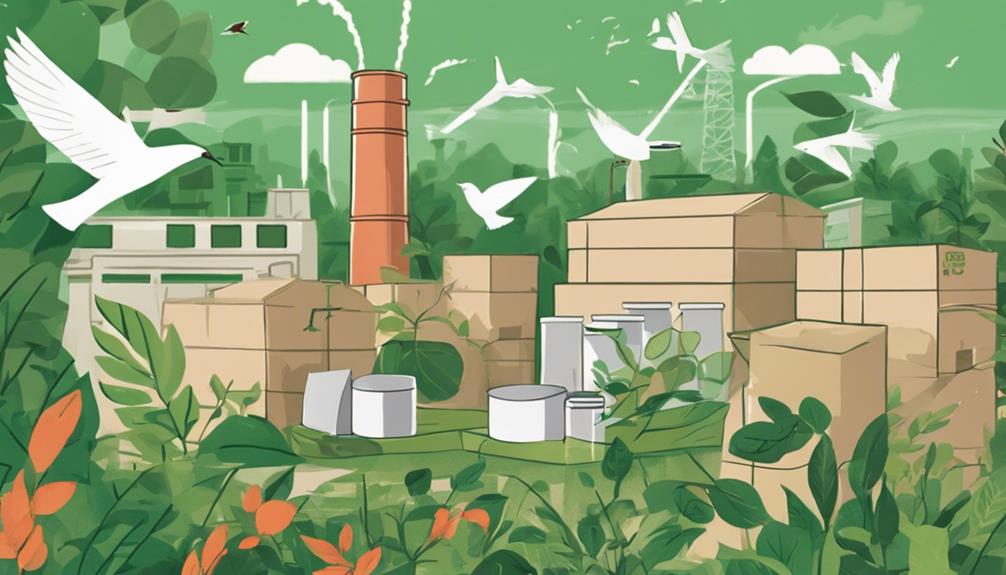
Businesses are turning to sustainable packaging solutions to reduce their environmental footprint, improve brand reputation, and appeal to eco-conscious consumers. Biodegradable materials, reusable packaging, and sustainable materials like plant-based packaging and recyclable materials minimize waste and carbon footprint. Right-sizing packaging eliminates excess materials, while compostable packaging and edible packaging solutions provide innovative alternatives. By adopting sustainable packaging solutions, businesses can reduce waste, lower costs, and enhance their brand reputation. As they explore sustainable packaging options, businesses will discover even more opportunities to make a positive impact on the environment and their bottom line.
Reducing Waste With Biodegradable Materials
By utilizing biodegradable materials, companies can greatly reduce their environmental footprint and minimize the staggering amount of waste generated by traditional packaging methods. This innovative approach not only benefits the environment but also enhances a company's reputation and appeal to eco-conscious consumers. Biodegradable packaging solutions are designed to break down naturally, reducing landfill waste and the devastating impact of plastic pollution on our planet.
One pioneering solution is microbe-infused packaging, which utilizes microorganisms to accelerate the decomposition process. This technology allows packaging materials to break down rapidly, leaving behind only carbon dioxide, water, and biomass. Additionally, these materials can be engineered to be soil friendly, enriching the soil as they decompose, rather than harming the environment. This synergy between innovative materials and natural processes enables companies to make a significant positive impact on the environment.
Companies that adopt biodegradable packaging solutions can expect to reap numerous benefits, including reduced waste management costs, enhanced brand reputation, and compliance with increasingly stringent environmental regulations. As consumers become increasingly environmentally conscious, businesses that prioritize sustainability will be well-positioned to capitalize on this trend. By embracing cutting-edge biodegradable materials, companies can revolutionize their packaging strategies and contribute to a more sustainable future.
Reusable Packaging for E-commerce
As companies continue to innovate in sustainable packaging, reusable packaging solutions are emerging as a game-changer for e-commerce businesses, offering a practical and environmentally friendly alternative to traditional single-use packaging.
Reusable packaging not only reduces waste but also provides an opportunity for businesses to build brand loyalty and increase customer retention. By using reusable packaging, companies can create a unique unboxing experience that sets them apart from competitors and fosters a connection with customers.
Here are some benefits of reusable packaging for e-commerce businesses:
| Benefit | Description | Impact |
|---|---|---|
| Reduced Waste | Reusable packaging reduces the need for single-use packaging, resulting in less waste. | Environmental |
| Cost Savings | Reusable packaging can be used multiple times, reducing packaging costs. | Financial |
| Increased Brand Loyalty | Unique unboxing experiences create memorable interactions, fostering brand loyalty. | Customer Retention |
| Improved Customer Experience | Reusable packaging provides a premium feel, enhancing the overall customer experience. | Customer Satisfaction |
| Competitive Advantage | Businesses that adopt reusable packaging stand out from competitors. | Competitive Edge |
Sustainable Packaging Materials to Use
Businesses looking to reduce their environmental footprint can start by exploring sustainable packaging materials. They're turning to biodegradable options, recyclable materials, and compostable alternatives that minimize waste and reduce carbon emissions. By adopting these eco-friendly solutions, companies can greatly decrease their environmental impact while also appealing to the growing number of eco-conscious consumers.
Biodegradable Packaging Options
Companies are turning to biodegradable packaging options, made from sustainable materials like cornstarch, sugarcane, or potato starch, to reduce their environmental footprint. These innovative solutions not only minimize waste but also provide a competitive edge in the market. Biodegradable inks, derived from renewable resources, are being used to print packaging materials, further reducing the carbon footprint. Plant-based materials, such as mushroom-based packaging or seaweed-based wrapping, are gaining popularity due to their compostable nature and low environmental impact.
Businesses can leverage biodegradable packaging options to enhance their brand reputation and appeal to the growing demographic of environmentally conscious consumers. By adopting sustainable packaging solutions, companies can reduce their reliance on fossil fuels, decrease greenhouse gas emissions, and minimize waste sent to landfills. As consumers become increasingly aware of the environmental implications of their purchasing decisions, companies that prioritize sustainability will be well-positioned for long-term success. By embracing biodegradable packaging options, businesses can take a significant step towards reducing their environmental footprint and promoting a more sustainable future.
Recyclable Materials Used
Beyond biodegradable options, recyclable materials are being harnessed to design sustainable packaging solutions that minimize waste and reduce environmental harm. Recyclable materials are gaining traction as an essential component of sustainable packaging, and for good reason. By selecting materials that can be recycled, businesses can greatly reduce waste and lower their carbon footprint. Material selection is important in this process, as it directly impacts the recyclability of the packaging.
Recycling infrastructure plays a critical role in the success of recyclable materials. Effective recycling infrastructure enables the efficient collection, sorting, and processing of recyclable materials, ensuring they're transformed into new products. This closed-loop system minimizes waste and conserves natural resources. Businesses can optimize their packaging design by choosing materials that are easily recyclable, reducing the complexity of the recycling process. By doing so, they can significantly decrease their environmental impact and contribute to a more sustainable future.
Compostable Packaging Alternatives
As consumers increasingly demand eco-friendly practices, innovators are developing compostable packaging alternatives that can seamlessly replace traditional materials, providing a guilt-free shopping experience. Compostable innovations have revolutionized the packaging industry, offering a sustainable solution to the environmental impact of traditional packaging. These alternatives are made from natural resources such as cornstarch, sugarcane, or potato starch, which can easily decompose, reducing waste and minimizing harm to the environment.
Businesses can benefit from using compostable packaging alternatives, which not only appeal to the growing demand for eco-friendly practices but also provide a unique selling point. Look for eco-friendly certifications such as Compostable or Biodegradable Products Institute (BPI) to make certain that the packaging meets the highest standards. By adopting compostable packaging alternatives, businesses can reduce their carbon footprint, enhance their brand reputation, and contribute to a more sustainable future. With the advancement of compostable innovations, it's never been easier for businesses to make a positive impact on the environment while also meeting consumer demands.
Minimizing Packaging With Right-Sizing
Moreover, by eliminating excess packaging materials, businesses can greatly reduce waste and costs by right-sizing their packaging to perfectly fit the product. This approach not only benefits the environment but also enhances packaging efficiency. Right-sizing eliminates unnecessary packaging components, reducing material usage and resulting in significant cost savings. Additionally, it streamlines the supply chain, simplifying logistics and transportation.
Moreover, right-sizing also enables businesses to optimize their packaging design, making it more functional and appealing to customers. This, in turn, can lead to increased customer satisfaction and brand loyalty. Moreover, right-sized packaging reduces the carbon footprint of transportation, as lighter and more compact packages require less fuel to transport. This leads to a significant reduction in greenhouse gas emissions, contributing to a more sustainable future.
Compostable Packaging for Food Industry
Food manufacturers can further reduce their environmental impact by adopting compostable packaging solutions that safely decompose, eliminating the need for traditional plastic packaging that often ends up in landfills or oceans. This shift towards sustainable packaging not only benefits the environment but also enhances a company's reputation and appeal to eco-conscious consumers. Compostable packaging guarantees that food products are packaged in a way that prioritizes food safety while minimizing waste.
In the food industry, supply chains are complex, and packaging plays a critical role in maintaining the integrity of products throughout transportation and storage. Compostable packaging solutions can be designed to meet the specific needs of different food products, ensuring that they remain fresh and secure from production to consumption. For instance, compostable packaging can be engineered to maintain ideal humidity levels, preventing moisture from affecting the quality of perishable goods.
Innovative Edible Packaging Solutions
Three companies are pioneering innovative edible packaging solutions that replace traditional plastic packaging with sustainable, biodegradable, and consumable alternatives. These companies are revolutionizing the packaging industry by creating edible wraps, containers, and bags that not only reduce plastic waste but also provide a tasty and healthy snack.
One of these companies has developed a plant-based Food Wrap made from algae, which is compostable, non-toxic, and even edible. This innovative wrap can replace traditional plastic wrap for food storage, reducing plastic waste and providing a sustainable solution for consumers.
Another company is utilizing seaweed to create biodegradable Seaweed Packaging that can replace plastic packaging for food and cosmetics. This sustainable packaging solution is not only eco-friendly but also provides a natural and healthy alternative to traditional packaging materials.
These innovative edible packaging solutions offer a game-changing approach to reducing plastic waste and promoting sustainability in the packaging industry. By replacing traditional plastic packaging with edible and biodegradable alternatives, businesses can substantially lessen their environmental footprint and appeal to the growing demand for sustainable products. As consumers become increasingly conscious of their environmental impact, these pioneering companies are leading the way in developing innovative solutions that benefit both people and the planet.
Reducing Carbon Footprint With Local Sourcing
By shifting towards local sourcing, businesses can greatly reduce their carbon footprint. This is achieved through supply chain optimization, regional material sourcing, and proximity-based logistics, which all contribute to minimizing transportation emissions. By adopting these strategies, companies can make a tangible impact on the environment while also streamlining their operations.
Supply Chain Optimization
Opting for local suppliers can slash transportation-related carbon emissions by up to 75%, making it a critical strategy in supply chain optimization. By reducing the distance goods travel, businesses can greatly decrease their carbon footprint. This approach also enables more efficient inventory management, allowing companies to respond quickly to changing demand and minimize waste. Moreover, local sourcing facilitates route optimization, which streamlines logistics and reduces fuel consumption. This, in turn, leads to lower emissions and operational costs. Implementing route optimization software can help businesses identify the most fuel-efficient routes, reducing transportation-related emissions even further. By combining local sourcing with route optimization, companies can create a more agile and sustainable supply chain. This innovative approach not only benefits the environment but also enhances the bottom line. By embracing supply chain optimization, businesses can stay ahead of the competition while reducing their environmental impact.
Regional Material Sourcing
Regional material sourcing is a natural extension of supply chain optimization, as businesses can further reduce their carbon footprint by sourcing materials from local suppliers. By doing so, companies can substantially decrease their transportation-related emissions and support the local economy. Local sourcing also enables greater material transparency, allowing businesses to better understand the origin and environmental impact of their materials. This increased visibility can help companies make more informed decisions about their packaging materials and supplier relationships. Additionally, regional material sourcing can lead to faster production cycles and improved supply chain resilience, as businesses are less reliant on international shipping lanes. By partnering with local suppliers, companies can create more sustainable and agile supply chains that benefit both the environment and the bottom line. As consumers increasingly demand eco-friendly practices, businesses that adopt regional material sourcing can gain a competitive edge and build brand loyalty.
Proximity-Based Logistics
Companies can greatly reduce their carbon footprint by leveraging proximity-based logistics, which involves strategically locating warehouses and distribution centers near their suppliers and customers. This approach minimizes transportation distances, resulting in lower emissions and costs. By setting up delivery hubs near key markets, businesses can optimize their logistics and reduce the need for lengthy, fuel-guzzling routes. Route optimization software can further refine this process, ensuring that deliveries are made in the most efficient way possible. Additionally, proximity-based logistics enables companies to respond more quickly to changing customer demands, as inventory can be replenished rapidly from nearby warehouses. This not only reduces carbon emissions but also enhances customer satisfaction. By embracing proximity-based logistics, businesses can create a more sustainable and agile supply chain that benefits both the environment and their bottom line.
Designing Out Waste With Circular Design
By embracing circular design, businesses can revolutionize their packaging strategies, minimizing waste and environmental harm while maximizing customer value and loyalty. This innovative approach encourages companies to rethink their entire production process, focusing on designing out waste and the continuous reuse and recycling of materials. To achieve this, businesses must adopt a system thinking mindset, analyzing their entire value chain to identify areas of inefficiency and opportunities for improvement.
Waste mapping is an essential step in this process, allowing companies to visualize and track waste generation throughout their operations. By pinpointing waste hotspots, businesses can develop targeted strategies to reduce, reuse, and recycle materials, minimizing the environmental impact of their packaging. This data-driven approach enables companies to make informed decisions, optimizing their packaging design to eliminate unnecessary materials, reduce packaging size, and incorporate sustainable materials. Furthermore, waste mapping can also inspire companies to engage consumers by promoting sustainable living tips for home, encouraging eco-friendly practices beyond the production phase. By sharing insights gleaned from waste mapping, businesses can foster a culture of sustainability among their customers, driving collective action towards environmental stewardship. Ultimately, this holistic approach not only enhances a company’s brand image but also plays a vital role in building a more sustainable future for all.
Cost Savings With Sustainable Packaging
As businesses shift towards sustainable packaging solutions, they're often surprised to find that eco-friendly practices can also lead to significant cost savings. By adopting sustainable packaging, companies can reduce their environmental footprint while also cutting costs. This is achieved through material efficiency, which involves using minimal materials to achieve the same level of protection and functionality.
Here are three key ways sustainable packaging can lead to cost benefits:
- Reduced material costs: By optimizing packaging design and using sustainable materials, companies can reduce the amount of material used, resulting in lower material costs.
- Lower waste disposal costs: Sustainable packaging generates less waste, which means lower waste disposal costs for companies.
- Increased supply chain efficiency: Sustainable packaging can also lead to increased supply chain efficiency, reducing transportation costs and improving logistics.
In addition to these cost benefits, sustainable packaging can also enhance a company's brand reputation and appeal to environmentally conscious consumers. By adopting sustainable packaging solutions, businesses can demonstrate their commitment to the environment while also improving their bottom line. By making the switch to sustainable packaging, companies can reap the financial rewards of going green.
Frequently Asked Questions
How Do I Measure the Environmental Impact of My Packaging?
She measures the environmental impact of her packaging by conducting a thorough assessment of her carbon footprint, which provides a holistic view of her supply chain's ecological effects. This involves calculating greenhouse gas emissions, energy consumption, and waste generation throughout the entire production process. By achieving supply chain transparency, she can identify areas for improvement and make data-driven decisions to reduce her packaging's ecological footprint, ultimately contributing to a more sustainable future.
Are Biodegradable Materials More Expensive Than Traditional Options?
As she weighs eco-friendly options, she wonders: are biodegradable materials more expensive than traditional ones? The cost comparison isn't always cut-and-dry. While biodegradable materials might be pricier upfront, material sourcing from sustainable suppliers can offset costs in the long run. Innovative companies are finding ways to make eco-friendly packaging more affordable, making it a more viable choice for businesses looking to reduce their environmental footprint.
Can I Customize Reusable Packaging for My Brand's Products?
She can absolutely customize reusable packaging to perfectly align with her brand's unique identity. By incorporating her brand aesthetics, she can create a cohesive packaging identity that resonates with her target audience. With advanced technologies and innovative materials, she can design reusable packaging that not only reduces waste but also elevates her brand's image and reinforces its values.
What Certifications Ensure Sustainable Packaging Materials Are Genuine?
Imagine a world where packaging materials are as green as the trees they're sourced from. When it comes to guaranteeing sustainable packaging materials are genuine, certifications are key. Look for labels like FSC, PEFC, or OHSAS 18001, which guarantee responsible forestry practices and supply chain transparency. It's important to vet material sourcing and the entire supply chain to make sure eco-friendly claims are authentic. Don't settle for greenwashing – opt for certified sustainable packaging that truly walks the talk.
How Long Does It Take to See Cost Savings From Sustainable Packaging?
When implementing sustainable packaging solutions, businesses often wonder when they'll see cost savings. The implementation timeline varies, but typically, companies start seeing financial benefits within 6-12 months. Accurate financial projections are essential to understanding the return on investment. By analyzing material reductions, waste minimization, and supply chain efficiencies, businesses can estimate significant cost savings, often exceeding 10-15% of their packaging expenditure.