

Location remains the key factor in real estate deals as it directly influences property value. Areas rich in amenities, services, and educational opportunities attract buyers and investors. Public transport access improves commute efficiency, raising property desirability. Emerging neighborhoods often experience gentrification, impacting community dynamics and property values. As a result, comprehending these aspects can shape investment strategies, helping investors identify prime opportunities. There’s more to uncover about how these factors interact and affect real estate decisions.
Article Highlights
- Prime locations drive property appreciation due to high demand, while less desirable areas struggle with value retention during market fluctuations.
- Proximity to amenities, services, and quality schools greatly enhances property desirability and boosts home values.
- Access to public transport significantly influences property value, promoting efficient commuting and environmentally friendly living options.
- Neighborhood trends, including gentrification, reshape community dynamics and impact property values, making these factors crucial for investment decisions.
- Understanding local economic indicators and infrastructure developments helps identify promising locations for investment and future growth potential.
The Timeless Importance of Location
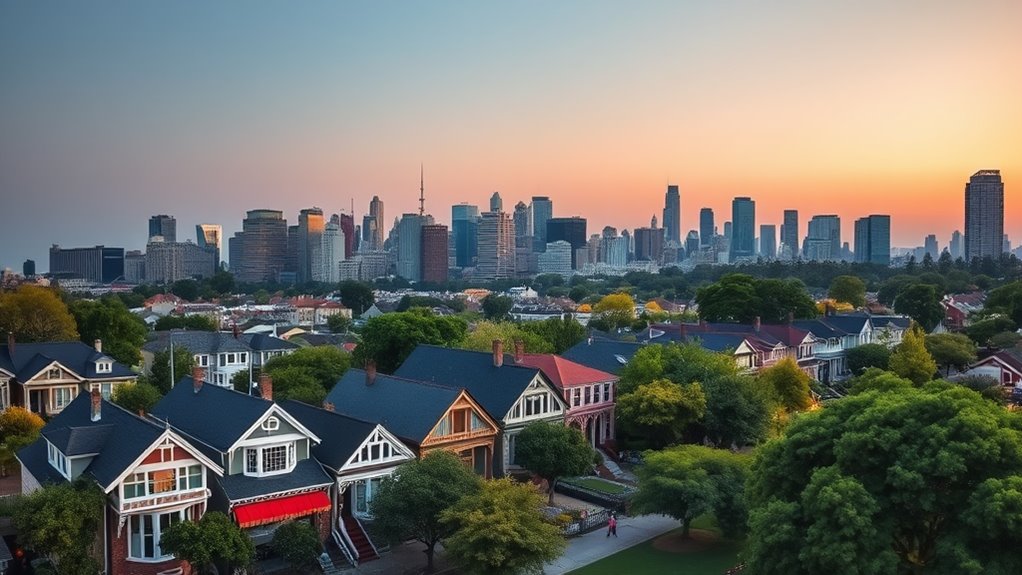
Although many factors influence real estate deals, the adage “location, location, location” remains paramount. A property’s value is often determined by its surroundings, and areas with higher urban density typically attract more buyers. These neighborhoods often offer greater cultural vibrancy, making them appealing for both residents and investors. The availability of arts, dining, and entertainment options contributes to a community’s desirability, driving demand for real estate in these locations. Additionally, urban density can lead to increased foot traffic, benefiting local businesses and creating a sense of liveliness. As trends evolve, the significance of location remains steadfast, ensuring that properties in culturally rich, densely populated areas retain their allure and investment potential. Moreover, understanding supply and demand dynamics is essential for capitalizing on location advantages.
Proximity to Amenities and Services
When considering real estate deals, proximity to amenities and services plays an essential role. Buyers often prioritize access to public transport, shopping options, and quality schools, as these factors greatly improve daily living. A location that offers these benefits can greatly influence a property’s value and desirability. Additionally, understanding market trends can help investors identify locations with the best potential for appreciation.
Access to Public Transport
Access to public transport plays a crucial role in determining the value of a real estate deal, as it greatly influences residents’ daily lives. Properties with high public transport accessibility not just attract buyers but additionally improve the overall quality of life. Transit oriented development promotes efficient commuting options, making areas more desirable.
- Encourages environmentally friendly commuting
- Increases property values and rental demand
- Provides convenient access to employment and services
Investors recognize that well-connected locations can lead to higher returns. As urban areas evolve, the importance of public transport in real estate continues to grow, making it a critical factor for potential buyers and investors alike. Comprehending this can greatly impact decision-making in real estate transactions.
Nearby Shopping Options
Proximity to shopping options greatly improves the appeal of a real estate property. Buyers today seek shopping convenience and retail diversity to elevate their lifestyle. Having a variety of stores nearby not just saves time but additionally adds value to daily living.
| Type of Store | Example | Benefit |
|---|---|---|
| Grocery | Fresh Mart | Daily basics nearby |
| Clothing | Style Hub | Fashion at your doorstep |
| Dining | Bistro Café | Quick meals accessible |
| Entertainment | Cineplex | Movie nights nearby |
| Services | Wellness Spa | Relaxation just minutes away |
When potential buyers see a lively shopping scene, it evokes excitement and a sense of community, making the property more desirable.
Quality of Schools
Quality schools can greatly influence a property’s appeal, especially for families. Parents often prioritize educational opportunities when choosing a neighborhood, and the quality of schools can considerably affect property values. High school rankings and strong educational funding can serve as a beacon for potential buyers.
- Proximity to high-ranking schools boosts desirability.
- Well-funded schools typically offer better resources and extracurricular activities.
- Neighborhoods with quality schools often see stable property values.
In essence, a home located near quality schools not solely attracts families but also guarantees a sound investment. As buyers assess their options, they’ll likely weigh school performance and funding heavily in their decision-making process, ultimately connecting education to real estate value.
Impact on Property Value
Though location often dictates the desirability of a property, its impact on value cannot be overstated. Properties situated in prime areas tend to experience higher property appreciation, as buyers are willing to pay more for convenience and amenities. Conversely, locations in less desirable areas may struggle to maintain their value, especially during market fluctuations. Economic factors, such as job growth and infrastructure improvements, can improve a location’s appeal, leading to increased demand and rising prices. However, a downturn in the local economy can negatively affect property values. Ultimately, comprehending the relationship between location and property value is vital for both buyers and investors in making informed real estate decisions. Additionally, current market trends can significantly influence how location affects property value, highlighting the importance of staying informed.
Neighborhood Trends and Development
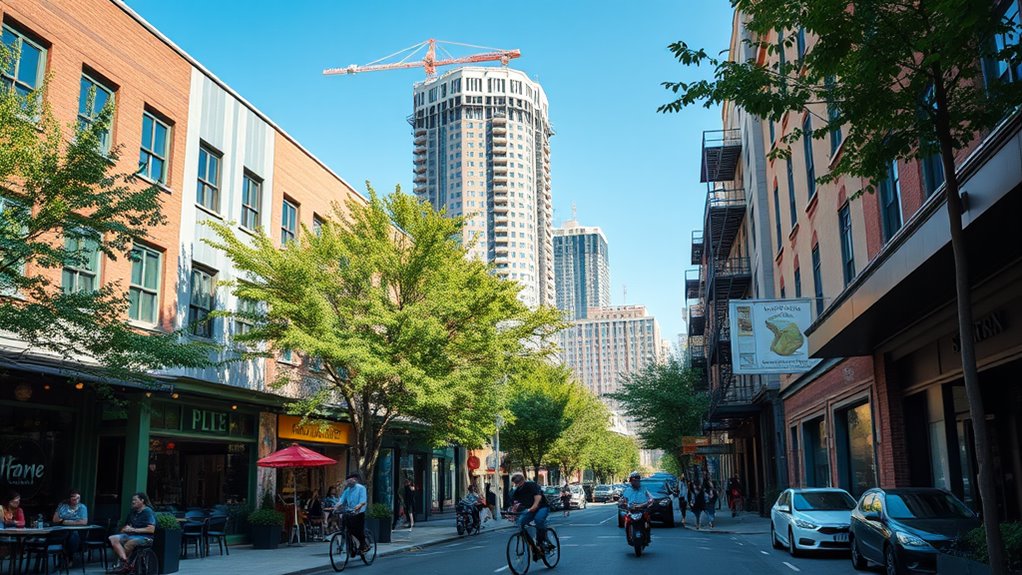
As the real estate market evolves, certain neighborhoods become emerging hotspots that attract attention from buyers and investors alike. Changes in infrastructure and available amenities greatly influence property values, making it vital to monitor these trends. Moreover, gentrification plays a critical role in shaping market dynamics, impacting both current residents and future developments. Integrating green spaces into urban planning not only enhances property values but also improves community well-being and environmental sustainability.
Emerging Neighborhood Hotspots
What makes a neighborhood the next hot spot for real estate investment? Emerging neighborhoods often feature a blend of cultural attractions and strong community engagement that draw new residents and investors alike. These areas are typically on the cusp of transformation, offering untapped potential for growth.
- Proximity to lively arts scenes and local events
- Development of parks and communal spaces to nurture connections
- An influx of local businesses catering to diverse demographics
As urban dwellers seek unique living experiences, neighborhoods that prioritize cultural offerings and community involvement become increasingly desirable. Investors are eager to capitalize on these trends, ensuring they’re one step ahead in the competitive real estate market.
Infrastructure and Amenities Impact
Emerging neighborhoods not merely attract attention for their cultural vibrancy but likewise for the infrastructure and amenities that support their growth. Successful infrastructure investment is essential, as it improves accessibility and connectivity, making these areas more appealing to potential residents and businesses. Well-planned roads, public transportation, and utilities can transform a once-overlooked location into a sought-after destination. Furthermore, community amenities like parks, recreational centers, and shopping districts create an inviting atmosphere that cultivates a sense of belonging. As these features develop, they not only enhance the quality of life but also drive real estate values upward. In the end, a neighborhood’s infrastructure and amenities greatly impact its desirability, shaping the future of real estate deals in the area.
Gentrification and Market Dynamics
Gentrification often reshapes the environment of urban neighborhoods, driving both excitement and contention among residents. As areas undergo transformation, the gentrification effects become evident through various market shifts, impacting housing prices, demographics, and local businesses.
- Increased property values often push out long-time residents.
- New developments attract higher-income individuals, altering community dynamics.
- Local businesses may struggle to adapt to changing consumer demands.
While some welcome the revitalization and economic growth, others fear the loss of cultural identity and affordable housing. Comprehending these neighborhood trends is vital for investors and homeowners alike, as they navigate the intricacies of the evolving real estate environment. In the end, location remains significant, but gentrification adds layers of nuance to market dynamics.
Accessibility and Transportation Links

Although proximity to major transportation links greatly boosts a property’s value, it’s not just about being near a bus stop or train station. Effective urban planning considers how accessibility impacts traffic patterns and the overall livability of a neighborhood. Properties that offer seamless access to various modes of transport can attract more buyers and tenants. Furthermore, the emergence of autonomous public transportation systems is expected to enhance connectivity and accessibility, making such locations even more desirable.
| Transportation Type | Benefits |
|---|---|
| Public Transit | Reduces commuting time |
| Major Highways | Improves connectivity |
| Bicycle Lanes | Promotes eco-friendly travel |
| Pedestrian Walkways | Encourages walkability |
Incorporating these elements into real estate decisions can lead to successful investments, ensuring properties remain desirable in a competitive market.
School Districts and Educational Opportunities
Access to quality education plays a crucial role in real estate decisions, often influencing buyers’ choices just as much as transportation options do. Parents seek homes in areas with strong school districts that offer both educational equity and high school ratings. A good education is seen as a pathway to success, making neighborhoods with reputable schools particularly desirable.
- Higher home values often correlate with top-rated schools.
- Districts that prioritize educational equity attract families looking for inclusive environments.
- Access to extracurricular activities can improve a child’s educational experience.
- In addition, the presence of sustainable practices within school programs can enhance community engagement and attract environmentally conscious families.
In essence, the presence of quality educational opportunities can greatly impact property values, driving demand and shaping community dynamics in real estate markets.
The Role of Location in Investment Strategy
While many factors influence real estate investment decisions, location remains paramount in shaping the overall strategy. Investors often prioritize locations that promise growth and stability, supporting investment diversification. Regional analysis helps identify these prime locations by examining economic indicators, demographic trends, and infrastructure developments. Understanding market trends can further enhance the identification of lucrative investment opportunities.
| Factors | Importance |
|---|---|
| Economic Growth | Drives demand for properties |
| Demographics | Influences buyer preferences |
| Infrastructure | Improves accessibility |
Frequently Asked Questions
How Does Climate Affect Real Estate Location Choices?
As storms rage and wildfires blaze, the impact of climate on real estate location choices becomes glaringly apparent. Buyers and investors increasingly seek areas with climate resilience and environmental sustainability in mind. Properties in regions less prone to natural disasters often command higher values, whereas those in vulnerable areas risk depreciation. Ultimately, the growing emphasis on climate considerations shapes not just preferences, but the very terrain of real estate investment decisions.
What Role Does Local Crime Rate Play in Location Importance?
Local crime rates considerably influence buyers’ decisions when selecting a location. Many individuals consider crime trends and safety perceptions as critical factors. High crime rates can deter potential homeowners, leading them to seek neighborhoods with lower crime statistics. Conversely, areas perceived as safe often attract more buyers, raising property values. In the end, crime rates shape not just personal choices but also the overall desirability of a location in the real estate market.
How Can Cultural Factors Influence Location Desirability?
It’s amusing how some might think a house’s value hinges solely on square footage. Yet, cultural factors play an essential role in location desirability. Different cultural preferences can shape community values, making certain neighborhoods more appealing. For instance, areas with rich cultural diversity or lively arts scenes often attract buyers seeking connection. In the end, a community’s shared values can enhance a location’s desirability, overshadowing mere physical attributes in the real estate equation.
Are There Specific Locations to Avoid Due to Natural Disasters?
When considering real estate, there’re specific locations to avoid because of natural disasters. Areas prone to flood zones often face significant risks during heavy rainfall, making them less desirable. Similarly, regions with high earthquake risks can lead to potential structural damage and safety concerns. Buyers should carefully evaluate these hazards before making decisions, as investing in such areas could result in financial losses and safety issues for occupants in the long run.
How Does Zoning Impact Real Estate Values in Different Locations?
“Good fences make good neighbors,” and zoning regulations play an important role in defining those boundaries. They can greatly impact property values, as stricter zoning often leads to higher property taxes and limited development options. Conversely, more flexible zoning can encourage growth and attract investors, increasing demand for real estate. In the end, comprehending local zoning laws is vital for anyone looking to navigate the intricacies of real estate value in different locations.