
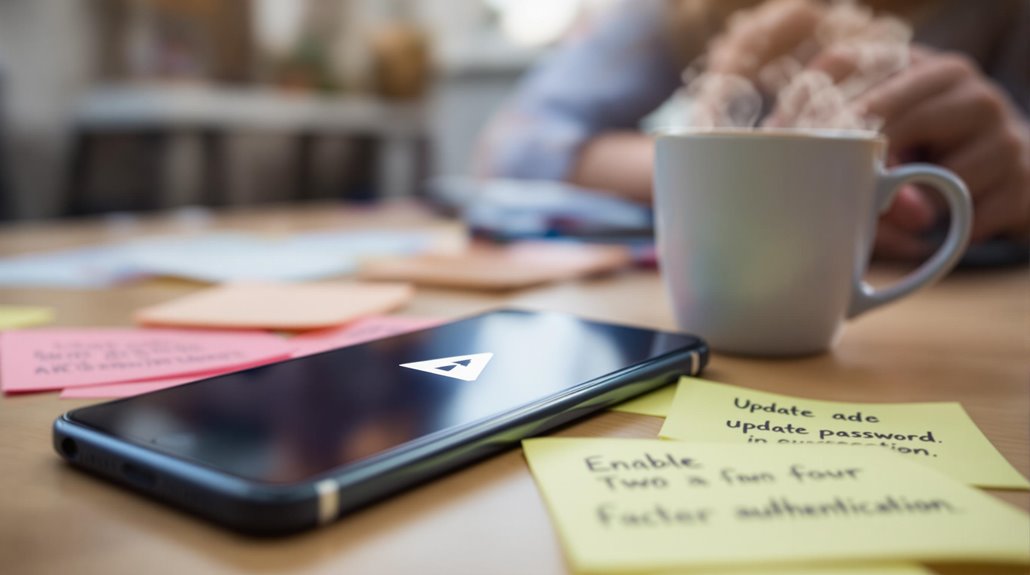
To keep data safe, individuals should drop habits like reusing passwords across accounts and ignoring software updates. Using weak passwords and sharing personal information publicly can likewise lead to security breaches. Falling for phishing scams by not verifying sources is dangerous. Connecting to public Wi-Fi without a VPN exposes sensitive data, whereas disabling firewall protection only increases vulnerability. Regularly backing up data is essential for recovery. There are more strategies to improve data security worth exploring.
Article Highlights
- Stop reusing passwords across multiple accounts; use unique, complex passwords for each to reduce the risk of data breaches.
- Avoid ignoring software updates, as outdated software leaves systems vulnerable to security threats and unpatched flaws.
- Don’t overlook privacy settings on social media; regularly review them to protect personal information from unintended exposure.
- Stop using public Wi-Fi without a VPN; it exposes sensitive data to interception and cyber threats.
- Avoid neglecting data backups; implement a solid backup plan to protect against data loss from hardware failures or cyber attacks.
Reusing Passwords Across Multiple Accounts
Though many people find it convenient to reuse passwords across multiple accounts, this practice greatly increases the risk of data breaches. When one account gets compromised, attackers can easily access other accounts, jeopardizing users’ sensitive information. Effective password management is vital for maintaining account security. Instead of relying on the same password, individuals should create unique passwords for each account, making it harder for hackers to gain access. Utilizing password managers can simplify this process, as they securely store and generate complex passwords. By adopting better password practices, users can greatly reduce their vulnerability to cyber threats and protect their personal information. Ultimately, prioritizing unique passwords is an important step in safeguarding digital lives.
Ignoring Software Updates
Ignoring software updates can leave systems vulnerable to security threats, as outdated software often has unpatched flaws. Many users miss out on new features and improvements that boost their experience and functionality. Staying up-to-date not just protects data but likewise maximizes the benefits of the latest technology.
Security Vulnerabilities Exploited
Even though many users underestimate the importance of timely software updates, neglecting them can expose devices to significant security vulnerabilities. Outdated software often lacks vital security patches that protect against emerging threats. Cybercriminals frequently exploit these weaknesses, making vulnerability assessments critical for identifying risks.
| Vulnerability Type | Consequences | Prevention |
|---|---|---|
| Unpatched Software | Data breaches | Regular updates |
| Outdated OS | Malware infections | Security patches |
| Weak Applications | Unauthorized access | Vigilant assessments |
New Features Benefits
Although security vulnerabilities can pose serious risks, many users are often drawn to the allure of new features offered by software updates. These new features can improve functionality and enhance user experience, making tasks easier and more efficient. Nevertheless, what’s often overlooked is the potential security benefits that accompany these updates. Many new features are designed with improved security measures, such as advanced encryption or better authentication methods, which can help protect user data more effectively. By embracing these innovations, users not only gain access to exciting capabilities but additionally bolster their defenses against cyber threats. Ultimately, staying informed about new features and their security implications can lead to a safer digital environment while improving overall productivity.
Using Weak Passwords
Many people underestimate the importance of strong passwords, often opting for simple, easily memorable combinations. This habit can lead to devastating consequences, as weak passwords lack the necessary password complexity to protect sensitive information. Cybercriminals can easily crack these simplistic passwords, gaining access to personal and financial data.
To improve security, individuals should consider using password managers. These tools generate and store complex passwords, making it easier to maintain unique login credentials for each account. By relying on a password manager, users can avoid the temptation of reusing weak passwords and guarantee their online presence remains secure. In the end, dropping the habit of using weak passwords is an essential step toward safeguarding personal information in today’s digital environment.
Sharing Personal Information Publicly
In terms of sharing personal information publicly, many people overlook the significance of social media privacy settings. They often forget that sharing their location can expose them to unwanted attention. It’s essential to understand how these factors can impact data safety.
Social Media Privacy Settings
As users scroll through their social media feeds, they often overlook the importance of privacy settings, which can lead to unintended exposure of personal information. Many don’t realize that adjusting these settings can greatly improve their security. Here are three crucial steps to take:
- Review privacy policies: Familiarize yourself with the platform’s privacy policy to understand how your data is used and shared.
- Enable social media encryption: Use platforms that offer encryption to protect your messages and personal information from unauthorized access.
- Limit sharing options: Adjust settings to control who can see your posts and personal details; choosing “Friends only” is often a safer choice.
Avoiding Location Sharing
How often do users think about the risks of sharing their location online? Many individuals underestimate the significance of location privacy, often posting their whereabouts without a second thought. By enabling geolocation settings on their devices, users might unknowingly broadcast their location to apps and platforms, exposing themselves to potential threats. This habit can lead to unwanted attention or even stalking, especially when sharing locations in real-time. To improve safety, it’s essential for users to disable location sharing for apps that don’t require it. Regularly reviewing and adjusting geolocation settings can safeguard personal information, ensuring that only trusted contacts have access to their whereabouts. In the end, prioritizing location privacy is a significant step in protecting oneself in the digital age.
Falling for Phishing Scams
Though many people believe they can easily spot a phishing scam, these deceptive tactics are becoming increasingly sophisticated. Cybercriminals often craft emails and messages that look legitimate, making phishing awareness critical in today’s digital environment. To improve scam detection, individuals should consider these practices:
- Verify the Sender: Always check the email address or phone number for authenticity.
- Look for Red Flags: Be cautious of poor grammar, urgent language, or unexpected attachments.
- Avoid Clicking Links: Instead, type the URL directly into your browser to guarantee safety.
Overlooking Two-Factor Authentication
Even though many individuals prioritize strong passwords, they often overlook the importance of two-factor authentication (2FA), which adds an essential layer of security. By implementing various two-factor methods, users can greatly reduce the risk of unauthorized access to their accounts. The authentication benefits are clear—account breaches become less likely when a second verification step is required.
| Two-Factor Methods | Benefits |
|---|---|
| SMS Verification | Quick and accessible |
| Authentication Apps | More secure and offline |
| Biometric Scans | Unique to individuals |
Embracing 2FA not just fortifies accounts but also instills confidence in users, knowing their data is better protected against threats. It’s a simple yet effective step in the direction of improved security.
Neglecting Cloud Storage Security
Many users underestimate the importance of securing their cloud storage. They often fail to use strong passwords or enable two-factor authentication, leaving their data vulnerable to breaches. It’s vital to adopt these practices to improve protection against potential threats.
Strong Password Practices
In today’s digital environment, a strong password acts as a fortress guarding personal data. Many individuals overlook the importance of password management and password complexity, leading to vulnerabilities. To improve security, they should adopt the following practices:
- Use a mix of characters: Combine upper and lower-case letters, numbers, and symbols to create complex passwords that are harder to crack.
- Avoid common phrases: Steer clear of easily guessed words or sequences, such as “password123” or “qwerty.”
- Utilize a password manager: This tool helps generate and store complex passwords, making it easier to maintain unique passwords for different accounts.
Enable Two-Factor Authentication
Strong passwords form the foundation of online security, but they’re just one piece of the puzzle. To improve protection, users should enable two-factor authentication (2FA). This additional layer utilizes various two factor methods, such as SMS codes or authentication apps, making unauthorized access markedly harder. The authentication benefits are clear; even if a hacker compromises a password, they’ll still need the second factor to gain entry. Many platforms offer 2FA, yet some users neglect this vital step, often because of convenience. Nevertheless, adopting this practice can drastically reduce the risk of data breaches. In the end, enabling two-factor authentication not only safeguards personal information but likewise provides peace of mind in an increasingly digital world.
Using Public Wi-Fi Without a VPN
Using public Wi-Fi without a VPN can expose sensitive data to various cyber threats, making it a risky choice for anyone who regularly connects to these networks. The public Wi-Fi risks include:
- Data Interception: Hackers can easily intercept unencrypted data, leading to stolen passwords and personal information.
- Man-in-the-Middle Attacks: Cybercriminals can position themselves between the user and the network, capturing data without detection.
- Malware Distribution: Public networks can serve as a breeding ground for malware, compromising devices connected to them.
Using a VPN provides considerable benefits, such as encrypting user data and hiding IP addresses, which improves online privacy. By adopting a VPN when using public Wi-Fi, individuals can greatly mitigate these risks and safeguard their sensitive information.
Disabling Firewall Protection
Although some may believe that disabling firewall protection can improve device performance or simplify connectivity, this practice greatly increases vulnerability to cyber threats. Firewalls serve as a crucial barrier between a user’s device and potentially harmful external traffic. By altering firewall settings or turning them off entirely, individuals expose their networks to various risks, including malware and unauthorized access. This negligence can lead to significant data breaches, compromising sensitive information. Maintaining robust network security necessitates keeping firewall protection enabled and properly configured. Users should regularly review their firewall settings to guarantee ideal protection in conjunction with performance needs. It is vital to understand that the convenience gained by disabling a firewall doesn’t outweigh the potential dangers lurking online.
Failing to Regularly Backup Data
Neglecting to regularly back up data can lead to devastating consequences, as unexpected events like hardware failures or cyber attacks can occur at any moment. Without a solid backup plan, individuals risk losing critical information that could be difficult or impossible to recover. Here are some crucial data recovery strategies and backup frequency recommendations:
- Daily Backups: For businesses or users with frequently updated data, daily backups are fundamental to minimize data loss.
- Weekly Backups: For less active users, a weekly backup can strike a balance between security and convenience.
- Cloud Storage: Utilize cloud services for automated backups, ensuring data is accessible from anywhere and protected against local disasters.
Frequently Asked Questions
What Are the Signs of a Phishing Scam?
In terms of spotting a phishing scam, the signs can be glaringly obvious, yet many still fall for them! Some common phishing indicators include suspicious email addresses, urgent requests for personal information, and poor grammar. If a message sounds too good to be true, it probably is! Scam recognition requires vigilance; users should always verify the source and be cautious of unexpected links. Staying informed can make all the difference in avoiding such traps.
How Often Should I Change My Passwords?
When considering password change frequency, experts suggest changing passwords every three to six months. This aligns with password best practices, ensuring accounts remain secure against potential breaches. Regular updates help minimize risks, especially for sensitive accounts. Nevertheless, if a data breach occurs, it’s essential to change passwords immediately. By following these guidelines, individuals can better protect their personal information and maintain stronger security overall, nurturing a more secure digital environment.
Can I Use a Password Manager Safely?
Could anyone truly feel safe in the digital universe without a reliable password manager? For those seeking secure password storage, a password manager’s benefits are undeniable. It not only generates strong passwords but additionally stores them safely, reducing the risk of breaches. Nonetheless, it’s vital to choose a reputable one; not all are created equal. With the right password manager, one can navigate the online domain with confidence and ease.
What Should I Do if My Data Is Compromised?
If someone’s data is compromised, they should act quickly. First, they need to change passwords and enable two-factor authentication to secure accounts. Next, they might consider professional data recovery services to retrieve lost information. Monitoring financial accounts is essential to prevent identity theft, so they should check for unauthorized transactions. Furthermore, reporting the breach to authorities can help mitigate the damage and protect against future incidents. Prompt action can make a significant difference.
How Can I Securely Share Files Online?
Research shows that 50% of professionals have experienced a data breach during sharing files online. To guarantee secure file sharing, one should use platforms that offer encrypted transfer, protecting sensitive information from unauthorized access. Tools like Google Drive or Dropbox provide options for encryption, but it’s vital to enable additional security features, such as two-factor authentication. By following these practices, individuals can greatly reduce the risks associated with sharing files over the internet.