
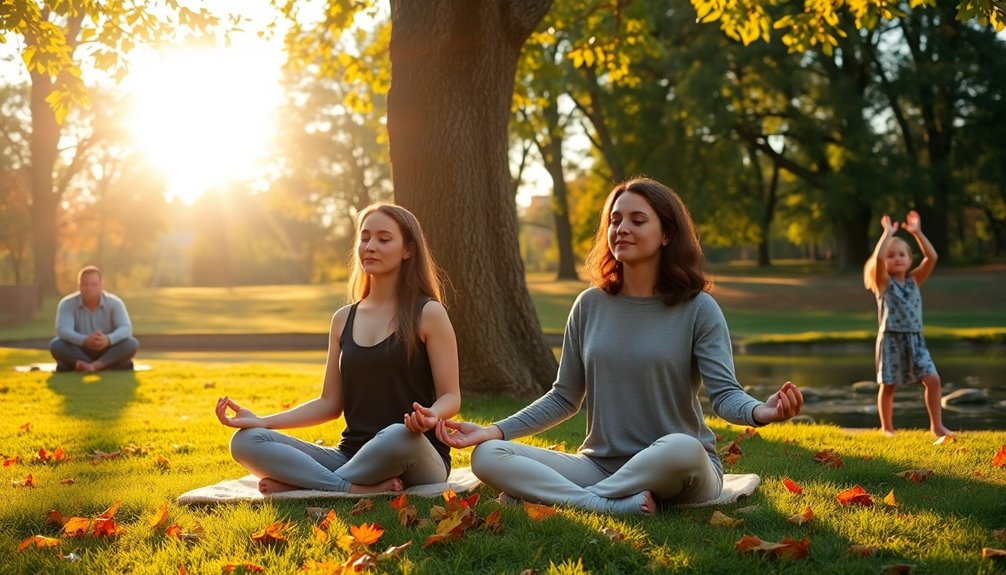
Stress affects many people, leading to feelings of overwhelm and depleted energy. Mindful techniques like deep breathing and mindfulness meditation can help manage stress effectively. By practicing deep breathing, individuals can promote calmness and mental clarity. Mindfulness meditation offers a way to view stressors without judgment, nurturing thoughtful responses. Integrating simple practices into daily life can lead to significant changes. There are even more strategies that can improve stress management further.
Article Highlights
- Practice deep breathing by inhaling for 4 seconds, holding for 4 seconds, and exhaling for 6 seconds to promote calmness and clarity.
- Engage in mindfulness meditation to observe thoughts and feelings without judgment, reducing the overwhelming nature of stress.
- Set clear boundaries in your life to manage stressors effectively and protect your mental well-being.
- Dedicate time to self-care activities that nurture your well-being, such as exercise, hobbies, or relaxation techniques.
- Maintain a gratitude journal to reflect on positive experiences, fostering a more optimistic perspective and reducing stress.
How Stress Affects You and Ways to Combat It
Although stress is a common part of life, its effects can be profound and far-reaching. For many, stress triggers like work pressures, financial concerns, and relationship issues can lead to feelings of overwhelm. This emotional turmoil can sap one’s energy and creativity, making it hard to enjoy life fully. Nevertheless, cultivating emotional resilience empowers individuals to better manage these challenges. By recognizing their stress triggers, they can take proactive steps to combat stress effectively. Techniques such as setting boundaries, seeking support, and practicing self-care can improve their ability to bounce back from adversity. Embracing these strategies not only nurtures a sense of freedom but additionally helps to restore balance in their lives, allowing them to thrive amidst life’s uncertainties.
The Power of Deep Breathing for Calmness
Recognizing stress triggers is just the beginning of managing stress effectively. Deep breathing is an empowering technique that nurtures calmness and promotes mental clarity. By focusing on the breath, individuals can release tension and ground themselves in the present moment.
Here’s a simple deep breathing exercise to try:
| Step | Action | Duration |
|---|---|---|
| Inhale | Breathe deeply through the nose | 4 seconds |
| Hold | Retain the breath | 4 seconds |
| Exhale | Release through the mouth | 6 seconds |
| Repeat | Continue for several cycles | 5 minutes |
Mindfulness Meditation: A Technique to Change Your Perspective
Even though many people might associate meditation with stillness, mindfulness meditation offers a dynamic approach that can fundamentally shift one’s perspective on stress. By embracing the present moment, individuals can access profound mindfulness benefits, experiencing life more vividly and authentically. This technique encourages awareness of thoughts and feelings without judgment, allowing practitioners to observe stressors from a distance. Instead of feeling overwhelmed, they learn to respond thoughtfully. Various meditation techniques, such as focusing on breath or body sensations, can improve this practice, promoting emotional resilience. As they cultivate this awareness, individuals often discover a newfound sense of freedom, breaking free from the cycle of stress and anxiety. In the end, mindfulness meditation serves as a significant tool for transforming one’s relationship with life’s challenges.
Practical Tips to Stay Present Every Day
How can one cultivate presence amidst the chaos of daily life? To encourage daily awareness, it helps to integrate mindful moments throughout the day. Simple practices, like taking a few deep breaths before starting a task or savoring the taste of a meal, can anchor the mind in the present. Setting reminders to pause and observe one’s surroundings can break the autopilot of routine. Engaging fully in conversations, listening intently, and letting distractions fade away can also improve mindfulness. Moreover, expressing gratitude for small experiences can shift focus from stressors to positivity. By weaving these practices into daily life, one can embrace a sense of freedom, allowing each moment to unfold without the weight of past or future concerns. Additionally, adopting a mindful shopping approach can enhance awareness of consumption habits and promote sustainable living.
Building a Mindfulness Routine That Lasts
To build a mindfulness routine that lasts, it’s essential to start small and gradually incorporate practices that resonate with one’s lifestyle. By establishing mindful habits as daily rituals, individuals can encourage a sense of freedom and inner peace. Here are four effective ways to create lasting mindfulness habits:
- Morning Intentions: Begin each day with a few minutes of intention-setting.
- Mindful Breathing: Dedicate time throughout the day for deep, focused breathing.
- Nature Walks: Spend time outdoors, fully engaging with the surroundings.
- Gratitude Journaling: End the day by jotting down things to be grateful for.
With consistency and patience, these practices can transform one’s approach to life, making mindfulness an integral part of their path.
Frequently Asked Questions
Can Mindfulness Techniques Be Practiced in a Busy Work Environment?
Yes, mindfulness techniques can definitely be practiced in a busy work environment. By incorporating mindful breaks throughout the day, employees can recharge and refocus. Even a few minutes of workplace meditation, perhaps during lunch or between meetings, can greatly improve well-being. It doesn’t require much time or space; just a quiet moment can help clear the mind, promoting a productive atmosphere. Embracing these small practices can provide the freedom to thrive amid chaos.
How Long Does It Take to See Benefits From Mindfulness Practices?
After just a few drops of rain can green the driest of deserts, so too can mindfulness practices bring clarity and calm. Typically, it takes about eight weeks of consistent practice to see noticeable benefits. This mindfulness duration allows the mind to adapt and flourish. When individuals commit to regular sessions, even amidst chaos, they often discover newfound freedom in their thoughts, leading to a more balanced and fulfilling life.
Are There Any Apps That Can Help With Mindfulness Meditation?
Yes, there are several mindfulness apps that offer valuable meditation tools. Many people find apps like Headspace and Calm particularly helpful for guiding their meditation practice. These platforms provide a range of sessions customized to different needs, making it easier for anyone to incorporate mindfulness into their daily routine. With user-friendly interfaces and engaging content, these apps can empower individuals to explore their mental well-being and cultivate a more peaceful mindset.
What if I Find It Hard to Concentrate During Mindfulness Exercises?
If someone finds it hard to concentrate during mindfulness exercises, they can try simple concentration tips. They should acknowledge their mindfulness distractions without judgment and gently redirect their focus. Setting a timer for shorter sessions can help, making it less intimidating. Using guided meditations may likewise provide structure, enhancing concentration. In the end, it’s about finding a rhythm that feels free and natural, allowing the mind to settle into the practice gradually.
Can Children Benefit From Mindfulness Techniques as Well?
Like a seed nurtured by sunlight, children can truly flourish through mindfulness techniques. It’s been shown that mindfulness benefits can improve children’s focus, helping them navigate the chaos of modern life. By practicing mindfulness, kids learn to cultivate awareness and manage their emotions, paving the way for greater emotional freedom. Incorporating simple techniques into their daily routines allows them to tap into their inner calm, nurturing resilience and deeper connections with themselves and others.