To spot red flags before signing a lease, one should thoroughly inspect the property for damage and cleanliness. They should carefully evaluate the lease agreement, looking for hidden fees and vague terms. Researching the landlord or property management is crucial, as is checking maintenance policies and responsiveness. Safety concerns, like crime rates in the area, shouldn’t be overlooked. Speaking to current or previous tenants can provide valuable insights, leading to a more informed decision. More tips will follow.
Article Highlights
- Conduct a thorough property inspection for damage, cleanliness, and appliance functionality to identify potential issues before signing the lease.
- Review the lease agreement carefully for hidden fees, ambiguous charges, and maintenance responsibilities to avoid unexpected expenses.
- Research the landlord’s reputation through online reviews and tenant experiences to gauge their reliability and responsiveness.
- Assess neighborhood safety and amenities by checking crime rates, lighting, and proximity to essential services for a secure living environment.
- Be cautious of unusually low rental prices, vague lease terms, or signs of rushed property tours, as these may indicate underlying problems.
Inspect the Property Thoroughly

In the matter of leasing a property, a thorough inspection is vital. Prospective tenants should pay close attention to the property condition, looking for any signs of damage, wear, or neglect. Cracks in walls, water stains, or malfunctioning appliances can indicate underlying issues that might not be immediately visible. Furthermore, reviewing the maintenance history is important; a well-maintained property often reflects responsible management. If past repairs seem inadequate or if the landlord can’t provide a clear maintenance record, that could raise red flags. Tenants shouldn’t hesitate to ask questions and request necessary repairs before signing any lease. A detailed inspection not only guarantees a safe living environment but also aids in making an informed decision about leasing the property. Additionally, understanding maintenance schedules can help tenants assess how well the property has been cared for over time.
Evaluate the Lease Agreement

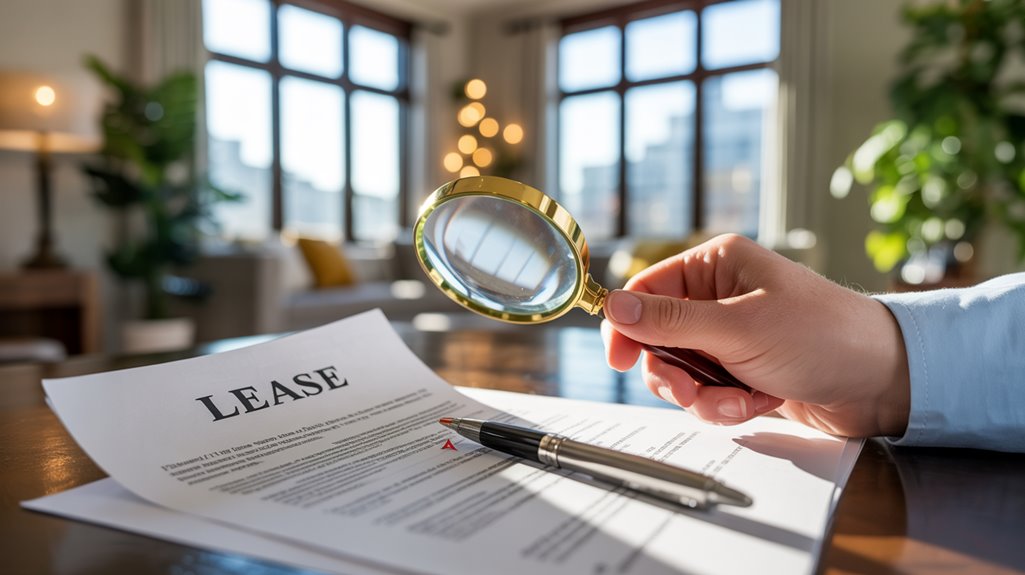
When evaluating a lease agreement, it’s essential to review key terms carefully. Rent amounts, payment deadlines, and renewal clauses should be clearly understood to avoid surprises later. Furthermore, tenants must be vigilant about hidden fees that might not be immediately apparent. Additionally, tenants should be aware of zoning laws that may impact their use of the leased property.
Key Terms Review
Before signing a lease, it’s vital to carefully evaluate the key terms outlined in the agreement. Comprehending these lease terms helps guarantee that potential tenants are aware of their legal obligations and rights. They should pay close attention to the following critical aspects:
| Key Term | Importance |
|---|---|
| Rent Amount | Know how much and when to pay |
| Lease Duration | Grasp the commitment required |
| Security Deposit | Be aware of the amount and conditions for refund |
Hidden Fees Analysis
Comprehending key terms is just the beginning; tenants must likewise be aware of potential hidden fees that could impact their overall budget. Many lease agreements include hidden costs that aren’t immediately apparent. These might consist of maintenance fees, parking charges, or penalties for late rent payments. It’s essential for tenants to seek fee transparency in their lease agreements. They should ask landlords to clarify any ambiguous charges and guarantee all fees are documented. By doing so, tenants can avoid unexpected expenses that can strain their finances. A thorough review of the lease can reveal these hidden fees, allowing tenants to make informed decisions and negotiate terms before signing on the dotted line.
Research the Landlord or Property Management

When renting a property, it’s essential to research the landlord or property management. Checking their online presence and reading tenant reviews can reveal a lot about their reputation. This information can help potential renters avoid pitfalls before signing a lease.
Online Presence Check
How well do you really know the landlord or property management before signing that lease? Conducting an online presence check is essential. A quick search can reveal a lot about their credibility. Checking social media and their official website can provide insights into their reputation and professionalism.
| Platform | Indicators of Credibility |
|---|---|
| Social Media | Active engagement, reviews |
| Website | Professional design, contact info |
| Online Reviews | Consistent feedback, complaint resolution |
Reputation Among Tenants
After conducting an online presence check, it’s important to go a step further and investigate the landlord or property management’s reputation among current and former tenants. Reading tenant experiences on review sites and social media can provide valuable insight into what it’s really like to live in the property. Look for patterns in reviews—consistent complaints about maintenance delays or poor landlord responsiveness should raise red flags. Engaging with past tenants, if possible, can additionally shed light on the landlord’s reliability and communication style. A positive reputation and prompt responses to tenant concerns often indicate a well-managed property, whereas negative feedback can signal potential issues that prospective renters should be wary of before signing that lease.
Check for Hidden Fees
Many renters overlook hidden fees that can considerably increase the overall cost of a lease. Before signing, it’s essential to scrutinize the lease agreement for any hidden charges that might arise. These could include administrative fees, utilities, parking fees, or even charges for amenities that aren’t clearly outlined. Renters should be wary of unexpected costs that may not be immediately apparent. For instance, some landlords may require renters to pay for maintenance or pest control, which can add up over time. By asking questions and thoroughly reviewing the lease, renters can gain a clearer picture of their financial obligations and avoid surprises down the road. In the end, being proactive can save money and prevent frustration later on. Additionally, understanding the unique needs of your rental market can help you identify and negotiate potential fees effectively.
Ask About Maintenance Policies
What happens if something breaks in the rental unit? Before signing a lease, it’s vital to ask about maintenance policies. Tenants should inquire about the landlord’s maintenance response—how quickly they’ll address repairs and the protocols in place. Knowing the repair timelines can save headaches later. For instance, if a heating system fails in winter, awareness of how long it typically takes for repairs can make a significant difference in comfort and safety. Furthermore, it’s wise to clarify who handles emergencies and what steps to take in those situations. A responsive maintenance policy not only reflects a landlord’s commitment to tenant satisfaction but likewise helps avoid potential disputes down the line. Always get these details clearly outlined before making any commitments.
Look for Safety Concerns
Ensuring a rental unit is well-maintained is just the beginning; prospective tenants should similarly scrutinize safety concerns before signing a lease. One vital aspect is reviewing crime statistics for the area. A high crime rate can indicate a less secure environment, potentially impacting the tenant’s peace of mind. Moreover, it’s important to assess neighborhood lighting. Well-lit streets can deter criminal activity and promote a sense of safety. If the area has dimly lit paths or insufficient streetlights, it could signal potential risks. Tenants should likewise observe the presence of security measures, such as cameras or neighborhood watch programs. By prioritizing safety concerns, renters can make informed decisions about their future living situation.
Talk to Current or Previous Tenants
How can prospective tenants gain insight into a rental property before signing a lease? One effective way is to talk to current or previous tenants. They can share their tenant experiences, providing invaluable information about the property, management, and any hidden issues. By engaging in conversations, prospective renters can gauge the communication style of the landlord or property manager. Are they responsive and helpful, or do they tend to ignore concerns? This feedback can reveal red flags that may not be apparent during a property tour. Furthermore, tenants can discuss the overall living conditions, maintenance responsiveness, and neighborhood dynamics. In the end, hearing firsthand accounts can help prospective tenants make informed decisions and avoid potential pitfalls in their rental expedition.
Frequently Asked Questions
What Should I Bring When Inspecting the Property?
When inspecting a property, it’s crucial to come prepared. They should create a checklist of items to examine, like appliances, plumbing, and electrical outlets. Tools like a flashlight can help illuminate dark areas, whereas a moisture meter can detect hidden dampness. Bringing a measuring tape is additionally useful for evaluating room sizes. By having these inspection tools and checklist items, they’ll be more equipped to assess the property effectively.
Can I Negotiate the Lease Terms With the Landlord?
When it involves negotiating lease terms with a landlord, it’s like trying to move a mountain—it may seem intimidating, but it’s possible. He’s got to keep in mind that lease flexibility can vary greatly. By employing effective negotiation tactics, such as highlighting his reliability as a tenant or suggesting reasonable adjustments, he might just find the landlord willing to compromise. Open communication can lead to mutually beneficial terms that work for both parties.
How Can I Verify the Landlord’s Reputation?
To verify a landlord’s reputation, it is crucial to research landlord reviews and tenant feedback. One effective method is to check online platforms where previous tenants share their experiences. Furthermore, local community forums or social media groups can provide valuable insights. If possible, prospective tenants should likewise talk to current or former tenants directly, as personal interactions often reveal the most honest assessments of a landlord’s reliability and professionalism.
Are There Any Restrictions on Personalizing the Rental Space?
When considering a rental space, one might wonder about the limitations on personalizing it. Restrictions can vary widely, so it’s essential to check the landlord’s personalization policies. Some may allow minor decorations, whereas others enforce strict decoration guidelines. Before getting too excited about potential changes, it’s imperative to clarify these rules. After all, nothing’s worse than realizing one’s dream of a personalized space is thwarted by unexpected lease conditions.
What Is the Process for Reporting Maintenance Issues?
Reporting maintenance issues typically involves submitting a maintenance request to the property management. Most landlords have a designated system, whether it’s an online portal or a phone line. After the request is made, the tenant can expect a response time that varies based on urgency. For instance, urgent issues might receive quicker attention, whereas non-urgent requests may take longer. It’s crucial for tenants to understand this process to guarantee timely repairs.