
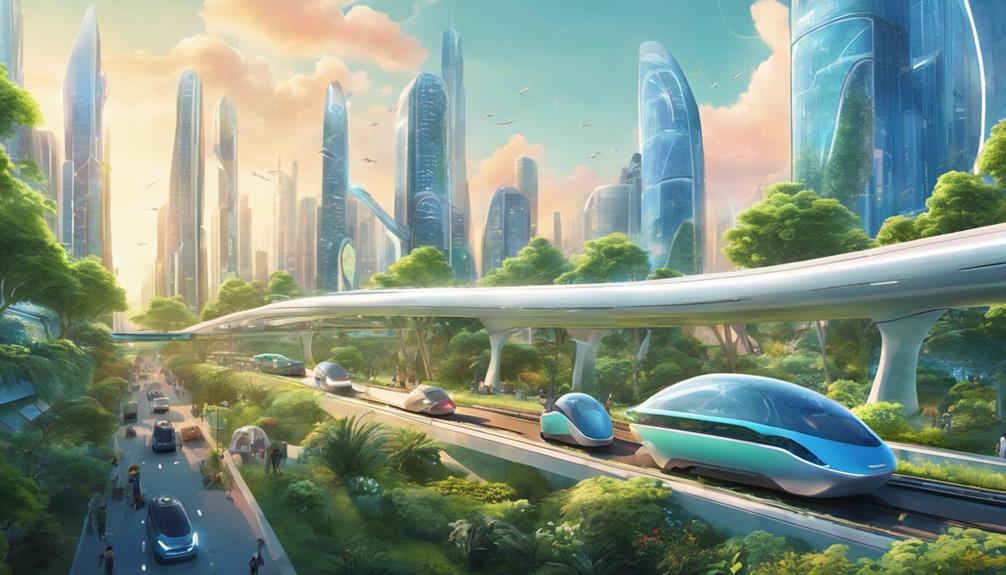
As the world moves towards a greener tomorrow, reimagining transportation is essential. By 2040, over 50% of new car sales are expected to be electric vehicles, reducing emissions and range anxiety. Smart city planning incorporates green infrastructure, IoT sensors, and data analytics to optimize energy consumption. Autonomous vehicles enhance safety, while electric infrastructure upgrades support increased charging demands. Clean energy powers public transit, and pedestrian-friendly city designs prioritize walkability. Green logistics optimizes freight transport. As we shift to a sustainable future, innovative solutions will pave the way – and there's still more to discover in the journey towards a greener tomorrow.
Electrifying the Roads Ahead
By 2040, over 50% of new car sales are expected to be electric vehicles, marking a significant shift towards a cleaner, more sustainable transportation landscape. As the world shifts to electric, innovative solutions are emerging to tackle the challenges that come with it. One such solution is battery swapping, a technology that allows drivers to swap depleted batteries for fully charged ones in a matter of minutes. This game-changing innovation has the potential to eliminate range anxiety, making electric vehicles a more viable option for the masses.
Another important aspect of this change is the development of extensive charging networks. With the rise of electric vehicles, there's a growing need for convenient, fast, and reliable charging infrastructure. Companies are investing heavily in building out widespread networks of charging stations, making it easier for drivers to charge their vehicles on the go. These networks will not only support the growing demand for electric vehicles but also provide a seamless charging experience, further accelerating the adoption of sustainable transportation.
As the transportation landscape continues to evolve, it's clear that electric vehicles are here to stay. With innovations like battery swapping and charging networks, the possibilities for a cleaner, more sustainable future are endless. By embracing these cutting-edge technologies, we're one step closer to a greener tomorrow.
Rethinking Urban Planning Strategies
As cities evolve, urban planners are recognizing the need to rethink their strategies to accommodate a more sustainable, efficient, and people-centric approach. By incorporating green infrastructure design, they can create spaces that not only mitigate the urban heat island effect but also promote eco-friendly transportation options. Meanwhile, smart city planning can optimize traffic flow, reduce congestion, and enhance the overall commuter experience.
Green Infrastructure Design
Rethinking urban planning strategies, cities are incorporating green infrastructure design to mitigate the environmental impact of transportation systems. This innovative approach prioritizes sustainability, reducing the carbon footprint of urban development. Green roofs, for instance, provide natural insulation, reducing energy consumption and urban heat island effects. Eco-friendly materials, such as recycled concrete and low-carbon cement, are being used to construct roads, sidewalks, and buildings, minimizing waste and pollution.
Green infrastructure design also focuses on integrating natural habitats into urban landscapes, creating corridors for wildlife and mitigating the urban heat island effect. This integrated approach improves air quality, reduces noise pollution, and enhances biodiversity. By incorporating green spaces, cities can reduce stormwater runoff, filter pollutants, and create recreational areas for citizens. As cities continue to grow, green infrastructure design will play a crucial role in creating sustainable, resilient, and thriving urban ecosystems.
Smart City Planning
Cities are adopting smart city planning strategies that integrate technology, data, and community engagement to create more efficient, sustainable, and responsive urban environments. By leveraging advanced technologies like IoT sensors and data analytics, cities can optimize energy consumption, traffic flow, and waste management, reducing their carbon footprint and improving the quality of life for citizens. Community engagement is an essential aspect of smart city planning, ensuring that residents' needs and concerns are addressed in the planning process. This includes designing public spaces that are accessible, inclusive, and adaptive to the community's needs. For instance, smart traffic management systems can adjust traffic signals in real-time to reduce congestion, while green spaces can be designed to mitigate the urban heat island effect. By prioritizing community engagement and leveraging technology, cities can create vibrant public spaces that foster social interaction, innovation, and economic growth. As cities continue to evolve, smart city planning will play an integral role in shaping a more sustainable, resilient, and connected urban future.
The Rise of Autonomous Vehicles
As the transportation landscape continues to evolve, autonomous vehicles are emerging as a game-changer, promising to revolutionize the way people and goods move around cities. They're expected to bring numerous benefits, including enhanced safety, increased mobility, and reduced traffic congestion. However, their widespread adoption will also require significant investments in electric infrastructure to support their operation.
Autonomous Vehicle Benefits
Autonomous vehicles are poised to revolutionize the way we travel, promising to greatly reduce the nearly 40,000 fatalities and 2.3 million injuries that occur on US roads every year. By removing human error from the equation, autonomous vehicles can notably enhance vehicle safety. With advanced sensors and AI-powered algorithms, these vehicles can detect and respond to hazards more quickly and accurately than human drivers. This reduction in accidents will not only save lives but also lessen the economic burden of accidents on individuals and communities.
Moreover, autonomous vehicles will increase rural accessibility, providing transportation options for those who may not have had access to reliable transportation before. This is especially important for rural areas where public transportation options are limited, and personal vehicle ownership may not be feasible. With autonomous vehicles, people in rural areas will have greater access to essential services, employment opportunities, and social connections, leading to improved overall quality of life.
Electric Infrastructure Needs
The widespread adoption of electric autonomous vehicles will require a significant overhaul of the nation's electric infrastructure to support the increased demand for charging stations and high-power charging corridors. As the number of electric vehicles on the road grows, it's vital to guarantee that the grid can handle the added load. This means upgrading the grid's resilience to accommodate the fluctuating demand for electricity.
Energy storage solutions will play a pivotal role in stabilizing the grid and providing a reliable supply of power. Advanced energy storage systems, such as batteries, will help to absorb excess energy generated during off-peak hours and release it when needed. This will not only improve grid resilience but also reduce the strain on the grid during peak hours.
Intelligent charging systems will also be essential in managing the increased demand for electricity. These systems will optimize charging times, reducing the strain on the grid during peak hours and encouraging off-peak charging. By investing in grid resilience and energy storage, we can guarantee a seamless shift to an electric autonomous vehicle fleet, paving the way for a greener, more sustainable transportation system.
Smart Infrastructure for Sustainability
Cities worldwide are investing heavily in smart infrastructure to reduce their environmental footprint and create sustainable transportation systems. This shift towards intelligent infrastructure is essential in building a greener tomorrow. One key area of focus is the development of Intelligent Pavements. These innovative roads are equipped with sensors and IoT technology, enabling real-time monitoring of traffic flow, air quality, and road conditions. This data is then used to optimize traffic management, reducing congestion and lowering emissions. Additionally, Intelligent Pavements can self-heal cracks and damage, reducing maintenance costs and extending their lifespan.
Resilient Systems are another critical component of smart infrastructure. These systems are designed to withstand and adapt to natural disasters, cyber-attacks, and other disruptions. By integrating advanced materials and technologies, cities can build transportation systems that can quickly recover from disruptions, minimizing downtime and ensuring the safety of citizens. Additionally, Resilient Systems can integrate with other smart infrastructure, such as Intelligent Pavements, to create a seamless and efficient transportation network. As cities continue to invest in smart infrastructure, they can expect to see significant reductions in emissions, improved air quality, and enhanced quality of life for citizens. By embracing innovation and cutting-edge technology, cities can pave the way for a sustainable and resilient transportation system.
Clean Energy for Public Transit
As smart infrastructure takes shape, electric buses and trains are emerging as an essential component of sustainable transportation, running on renewable energy sources that drastically reduce greenhouse gas emissions. This shift towards clean energy is pivotal in the fight against climate change, and innovative solutions are being implemented to make it a reality.
One such solution is the integration of fuel cells, which convert chemical energy into electricity, providing a zero-emission power source for public transit. Additionally, solar panels are being installed on bus shelters and train stations, harnessing the power of the sun to fuel transportation.
| City | Number of Electric Buses | CO2 Emissions Reduction |
|---|---|---|
| New York City | 450 | 100,000 tons/year |
| Los Angeles | 300 | 75,000 tons/year |
| Chicago | 200 | 50,000 tons/year |
| Houston | 250 | 60,000 tons/year |
| Phoenix | 150 | 35,000 tons/year |
The data speaks for itself – the impact of clean energy on public transit is substantial. As cities continue to evolve towards sustainable transportation, the benefits will be felt far beyond the world of transportation, influencing the health and well-being of citizens and the planet as a whole. It's time to reimagine transportation for a greener tomorrow, and clean energy for public transit is a critical step in the right direction.
Pedestrian-Friendly City Design
Designing streets that prioritize pedestrian safety and accessibility is essential in reimagining transportation for a sustainable future. As cities evolve, pedestrian-friendly infrastructure is vital to reducing carbon emissions and promoting a healthier environment. By rethinking urban planning, cities can create walkable neighborhoods that encourage residents to ditch their cars and opt for a more active lifestyle. This shift not only reduces air pollution but also fosters a sense of community, as pedestrians interact with their surroundings and each other.
Bikeable streets are another critical aspect of pedestrian-friendly city design. Dedicated bike lanes and ample bike parking encourage cyclists to take to the roads, reducing reliance on fossil fuels and decreasing traffic congestion. Additionally, bike-friendly infrastructure can also boost local businesses, as cyclists are more likely to stop and explore local shops and cafes. By prioritizing pedestrian and cyclist safety, cities can create vibrant, people-centric spaces that promote a healthier, more sustainable way of living. As cities continue to grow and evolve, it's essential to prioritize pedestrian-friendly design, creating a better future for generations to come. By doing so, we can build a greener, more sustainable tomorrow, one walkable neighborhood at a time.
Green Logistics for Freight Transport
Logistics companies are embracing green logistics for freight transport, leveraging alternative fuels, and optimizing routes to minimize their carbon footprint. This shift towards sustainability is essential, as the freight transport sector is a significant contributor to greenhouse gas emissions. By adopting green logistics, companies can reduce their environmental impact while improving operational efficiency.
One key strategy is freight optimization, which involves streamlining routes and reducing the number of vehicles on the road. This not only cuts emissions but also saves companies time and resources. Additionally, green warehousing is gaining traction, with facilities incorporating renewable energy sources, energy-efficient equipment, and sustainable building materials.
To further offset their carbon footprint, logistics companies are investing in carbon offset programs. These initiatives support projects that reduce greenhouse gas emissions, such as reforestation or renewable energy projects. By offsetting their emissions, companies can achieve carbon neutrality and demonstrate their commitment to sustainability.
A critical aspect of green logistics is the integration of sustainable practices throughout the supply chain. This involves collaborating with suppliers, manufacturers, and distributors to adopt environmentally friendly practices. By working together, logistics companies can create a more sustainable and efficient supply chain that benefits both the environment and their bottom line. As the demand for eco-friendly logistics grows, companies that prioritize sustainability will be well-positioned to thrive in a rapidly changing market.
Frequently Asked Questions
How Will Rural Areas Access Green Transportation Alternatives?
Rural areas struggle to access green transportation alternatives, hindering rural mobility. To bridge this gap, community engagement is essential. She develops innovative solutions, partnering with local leaders to design tailored transportation systems. By engaging rural communities, she identifies unique challenges and opportunities, fostering a collaborative approach to sustainable transportation. This grassroots approach guarantees rural residents have a voice in shaping their own green transportation future.
Will Autonomous Vehicles Replace Human-Driven Public Transit?
Silky spheres of self-driving sophistication are swirling around the streets, sparking speculation: will autonomous vehicles replace human-driven public transit? While ride-hailing services are redefining daily commutes, vehicle ownership might not be entirely obsolete. Autonomous fleets could complement, rather than replace, human-driven transit, offering flexible, efficient, and eco-friendly solutions. As the transportation tapestry unfolds, innovators are weaving a future where humans and autonomous vehicles harmoniously coexist.
Can Green Infrastructure Be Integrated Into Existing Cities?
She believes that integrating green infrastructure into existing cities is not only possible but necessary. Urban planning strategies like parkification, which transforms underutilized spaces into green oases, can be highly effective. By creating green corridors and eco-friendly streets, cities can reduce pollution, mitigate the urban heat island effect, and increase biodiversity. It's time for innovative urban design to prioritize people and the planet.
What Role Will Government Incentives Play in the Transition?
As the green revolution gains momentum, government incentives take center stage. Like a master conductor, they orchestrate the symphony of transformation. Tax credits become the harmonious melody, enticing innovators to join the chorus. A regulatory framework provides the rhythm, ensuring a smooth evolution. By striking the right chord, governments can accelerate the pace of change, making the future of transportation a harmonious blend of sustainability and innovation.
How Will the Cost of Green Transportation Be Made Affordable?
To make green transportation affordable, companies will need to achieve economies of scale through mass production and innovative manufacturing techniques. Governments can also play an essential role by implementing carbon pricing, which would create a financial incentive for companies to develop sustainable transportation options. Additionally, subsidies and tax credits can help reduce the upfront costs, making eco-friendly transportation more accessible to the masses.