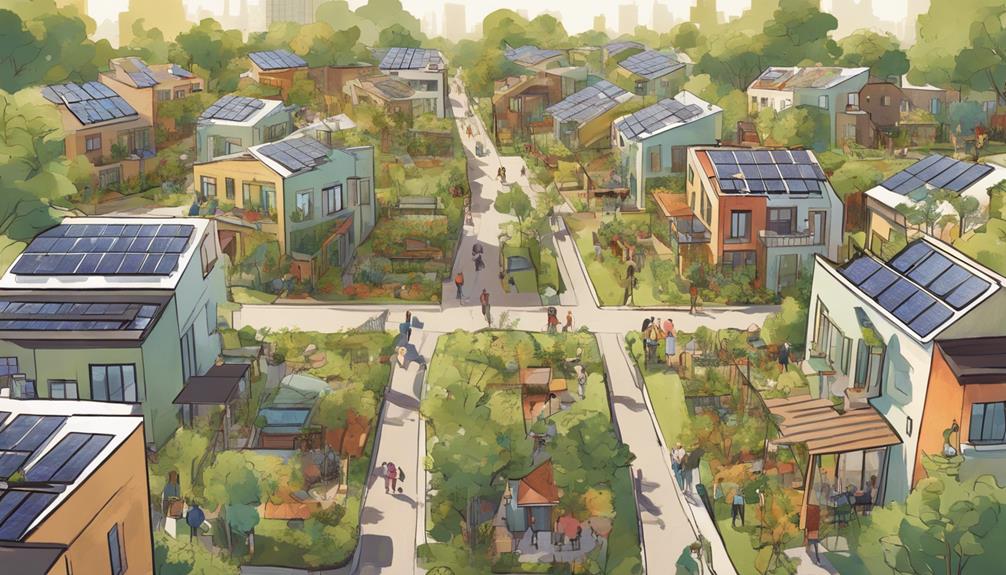
Cities worldwide are transforming into green communities, reducing environmental footprints and enhancing citizens’ quality of life. From incorporating green roofs and urban gardens to sustainable housing initiatives, community-led renewable energy projects, and waste reduction strategies, innovative approaches are being implemented. Eco-friendly transportation models, green spaces for community well-being, and thriving local food systems are also gaining traction. As successful green communities emerge, they serve as models for others to follow, demonstrating the tangible benefits of sustainable development. As you explore these success stories, you’ll uncover the inspiring ways cities are building a greener, more resilient future. These initiatives not only foster environmental stewardship but also encourage residents to adopt sustainable lifestyle choices that contribute to their well-being and foster a sense of community. As cities prioritize sustainability, they are also investing in education and awareness programs that empower individuals to make informed decisions about their consumption habits. Through collaboration and innovation, these cities are setting a precedent for a future where economic growth and environmental responsibility go hand in hand.
Greening Urban Landscapes in Practice
In over 70% of US cities, urban planners and architects are incorporating green roofs, green walls, and urban gardens into their designs to mitigate the urban heat island effect and improve air quality. This shift towards 'greening' urban landscapes is an essential step towards creating sustainable and livable cities. Urban Forestry, a key strategy in this approach, involves planting and maintaining trees in urban areas to provide shade, reduce air pollution, and increase biodiversity. Green Corridors, another critical component, are linear parks or gardens that connect fragmented green spaces, promoting ecological connectivity and enhancing urban ecosystems.
By integrating these green infrastructure elements, cities can reduce the urban heat island effect, which is responsible for increased energy consumption, heat-related illnesses, and mortality. Green roofs, for instance, can reduce urban temperatures by up to 4°C, while green walls can remove pollutants from the air, improving air quality. Additionally, urban gardens and parks provide recreational spaces for citizens, promoting physical activity, social interaction, and mental well-being.
Urban Forestry and Green Corridors also play an important role in managing stormwater runoff, reducing flood risk, and enhancing urban resilience. As cities continue to grow and urbanize, incorporating green infrastructure into urban design is no longer a luxury, but a necessity. By adopting innovative and sustainable urban planning strategies, cities can create healthier, more livable environments for their citizens, paving the way for a greener, more sustainable future.
Sustainable Housing in Action
As sustainable housing becomes a priority, architects and builders are turning to eco-friendly building materials that reduce waste and minimize environmental impact. They're also incorporating green space design into their plans, creating homes that not only reduce carbon footprints but also promote a connection to nature. By combining these innovative approaches, sustainable housing is becoming a reality, one green building at a time.
Eco-Friendly Building Materials
What makes eco-friendly building materials a game-changer in sustainable housing is their ability to reduce the environmental footprint of construction projects. By using innovative materials, builders can minimize waste, conserve natural resources, and decrease the carbon footprint of buildings. One such material is bamboo insulation, which offers superior thermal performance while being highly renewable. Bamboo has a shorter harvest cycle compared to traditional wood, making it an attractive option for eco-conscious builders.
Another material making waves is recycled concrete. This sustainable alternative to traditional concrete reduces the need for virgin aggregates, decreasing the energy required for production. Recycled concrete also helps to divert waste from landfills, further minimizing the environmental impact of construction. By incorporating these eco-friendly materials into building designs, developers can create sustainable housing that not only benefits the environment but also provides a healthier living space for occupants. As the demand for sustainable housing continues to grow, innovative materials like bamboo insulation and recycled concrete will play an essential role in shaping the future of eco-friendly construction.
Green Space Design
By deliberately incorporating natural elements, green space design transforms urban landscapes into thriving ecosystems that support biodiversity and mitigate the urban heat island effect. This innovative approach prioritizes the integration of urban forestry, incorporating trees and vegetation into city planning to create a more sustainable environment. Urban forestry not only provides shade and improves air quality but also helps to reduce stormwater runoff and absorb carbon dioxide.
Park revitalization is another key aspect of green space design, where underutilized or neglected spaces are reimagined as vibrant community hubs. By incorporating green infrastructure, such as rain gardens and green roofs, these revamped parks become hubs for community engagement, recreation, and environmental stewardship. Green space design is a critical component of sustainable housing, as it not only enhances the aesthetic appeal of a community but also provides tangible environmental benefits. By embracing green space design, cities can become more resilient, sustainable, and livable, ultimately building a better future for generations to come.
Community-Led Renewable Energy
As communities move towards a greener future, they're turning to community-led renewable energy initiatives to reduce their carbon footprint. Local energy cooperatives, for instance, allow residents to collectively invest in and benefit from renewable energy projects. Meanwhile, community solar initiatives enable individuals to pool their resources and invest in shared solar arrays, making clean energy more accessible and affordable.
Local Energy Cooperatives
Local energy cooperatives, owned and controlled by community members, are emerging as a viable way to promote community-led renewable energy initiatives. These cooperatives are built on the principles of cooperative governance, where members have a say in decision-making and benefit from the profits. This model of energy democracy empowers communities to take charge of their energy needs, reducing reliance on external providers and promoting sustainable development.
By leveraging collective resources and expertise, local energy cooperatives can develop and maintain renewable energy projects, such as wind farms or solar panels. This not only reduces carbon emissions but also generates revenue for the community. Members can benefit from reduced energy costs, and surplus funds can be reinvested in local initiatives. Additionally, cooperative governance ensures that decision-making is transparent and accountable, fostering trust and community engagement.
As a result, local energy cooperatives are becoming a beacon of hope for building resilient, sustainable communities. By putting energy production and distribution in the hands of the people, these cooperatives are redefining the way we think about energy democracy.
Community Solar Initiatives
They're harnessing the power of community-led initiatives to bring clean energy to their neighborhoods through community solar programs. These initiatives are bridging the gap for individuals who can't install solar panels on their own properties, whether due to cost, space, or structural limitations. Community solar programs allow multiple individuals or organizations to share the benefits of a single solar array, making clean energy more accessible and affordable. Creative solar financing options are emerging, enabling communities to invest in their own renewable energy futures. This democratization of energy is at the heart of Energy Democracy, where communities take control of their energy production and consumption. By pooling resources and expertise, community solar initiatives are driving innovation and reducing carbon emissions. As these programs grow, they're building a more sustainable, community-driven energy landscape. By empowering communities to take charge of their energy needs, community solar initiatives are redefining the way we think about energy production and consumption.
Waste Reduction in Action
Green communities worldwide have implemented innovative waste reduction strategies, from curbside composting programs to pay-as-you-throw systems, resulting in significant reductions in waste sent to landfills. These forward-thinking communities recognize the importance of minimizing waste to protect the environment and conserve natural resources.
Waste auditing, an essential step in the waste reduction process, helps identify areas of improvement and tracks progress toward waste reduction goals. By conducting regular waste audits, communities can identify opportunities to reduce, reuse, and recycle waste, ultimately working toward a goal of zero landfills.
Here are just a few examples of the impact of waste reduction efforts:
- 80% reduction in waste sent to landfills in a single year through a combination of recycling programs and composting initiatives.
- 50% decrease in waste disposal costs for a community that implemented a pay-as-you-throw system, where residents pay for the waste they generate.
- 90% of residents participating in a curbside composting program, diverting organic waste from landfills and creating nutrient-rich soil for local gardens.
Eco-Friendly Transportation Models
Cities worldwide are embracing eco-friendly transportation models, revolutionizing the way people move around while reducing carbon footprints and improving air quality.
One of the most innovative solutions is the development of electric highways. These roads are equipped with charging infrastructure, allowing electric vehicles to recharge on the go, reducing range anxiety and making long-distance travel more feasible. Sweden's eRoadArlanda is a pioneering example, where a 2-kilometer stretch of road is equipped with electric charging technology.
Another successful model is bike sharing systems, which promote sustainable and healthy transportation. These systems provide an affordable and convenient way for citizens to navigate cities, reducing reliance on fossil fuels and decreasing air pollution. Cities like Paris and Barcelona have successfully implemented bike sharing systems, with thousands of bicycles available for public use.
| Eco-Friendly Transportation Models | Key Benefits |
|---|---|
| Electric Highways | Reduces range anxiety, promotes long-distance EV travel |
| Bike Sharing Systems | Encourages sustainable, healthy transportation, reduces air pollution |
| Public Transportation Upgrades | Increases efficiency, reduces emissions, enhances passenger experience |
Green Spaces for Community Building
Parks and gardens are being designed with community building in mind, incorporating features that foster social interaction and a sense of community among residents. These green spaces are no longer just a place for recreation, but have become hubs for community engagement and connection. Through Park Revitalization initiatives, underutilized parks are being transformed into vibrant community hubs, complete with amenities such as community gardens, public art, and event spaces.
These revitalized parks are becoming incubators for community building, providing a platform for residents to come together, share ideas, and build relationships. Community Gardens, in particular, have proven to be a powerful tool for community building, bringing people together around a shared passion for sustainable living and fresh produce.
Here are just a few examples of the impact of green spaces on community building:
- Increased social connections: Green spaces provide a platform for residents to meet and interact, helping to combat social isolation and build stronger, more resilient communities.
- Improved mental health: Spending time in nature has been shown to have a positive impact on mental health, reducing stress and anxiety, and improving overall wellbeing.
- Community empowerment: Green spaces can serve as a catalyst for community-led initiatives, empowering residents to take ownership of their community and drive positive change.
Water Conservation Successes
Innovative water conservation strategies are being implemented across communities, yielding impressive results and setting a new standard for sustainable water management. One such strategy is Rainwater Harvesting, which involves collecting and storing rainwater for non-potable uses such as flushing toilets and washing cars. This approach not only reduces the demand on municipal water supplies but also decreases stormwater runoff and the associated pollutants that enter waterways.
Another effective approach is the implementation of Greywater Systems, which reuse water from sinks, showers, and washing machines for irrigation and flushing toilets. This closed-loop system reduces the amount of freshwater used for irrigation and decreases the amount of wastewater generated. Moreover, Greywater Systems can be designed to recharge groundwater aquifers, replenishing this essential resource.
Communities that have adopted these strategies have seen significant reductions in water consumption, with some reporting savings of up to 30%. These successes demonstrate that sustainable water management is not only environmentally responsible but also economically viable. As communities continue to innovate and adapt, they set a new standard for water conservation, inspiring others to follow suit. By embracing these cutting-edge strategies, communities can secure a sustainable future for generations to come.
Local Food Systems Thrive
As communities focus on building a more sustainable future, they're cultivating thriving local food systems that not only nourish their residents but also boost the local economy. By supporting local farmers and promoting urban agriculture, communities are reducing their carbon footprint and increasing access to fresh, healthy produce. This shift towards local food systems is also fostering a sense of community, as residents come together to support local farmers and celebrate the harvest.
Here are just a few reasons why local food systems are thriving:
- Freshness matters: Produce picked at the peak of freshness not only tastes better, but it's also more nutritious.
- Community building: Local food systems bring people together, fostering a sense of community and social connection.
- Economic benefits: By supporting local farmers, communities are keeping money within the local economy, creating jobs and stimulating growth.
Through initiatives like farm-to-table programs and urban agriculture projects, communities are reclaiming their relationship with food and building a more sustainable future. By prioritizing local food systems, communities are not only nourishing their residents but also cultivating a healthier, more resilient community.
Community Engagement Strategies
Effective community engagement strategies are essential to building a green community, as they empower residents to take an active role in shaping their neighborhood's sustainable future. By fostering a sense of ownership and accountability, community outreach programs can mobilize residents to take action towards a greener tomorrow. This can be achieved through regular town hall meetings, community surveys, and social media campaigns that encourage feedback and participation.
Resident involvement is critical to the success of green initiatives, as it allows for a grassroots approach to sustainability. By engaging residents in the decision-making process, communities can tailor green initiatives to meet the specific needs and concerns of the neighborhood. This not only increases the likelihood of successful implementation but also promotes a sense of community pride and responsibility.
Community outreach programs can also facilitate partnerships between local organizations, businesses, and residents, leading to collaborative efforts that drive positive change. For instance, community gardens and clean-up initiatives can bring people together, promoting social cohesion and a shared sense of purpose. By investing in community engagement strategies, green communities can guarantee that their sustainability efforts are inclusive, effective, and lasting. By empowering residents to take an active role in shaping their community's future, green communities can thrive and serve as a model for others to follow.
Policy Changes for a Greener Tomorrow
As policymakers shift their focus towards a greener tomorrow, they're implementing key changes to drive sustainable development. They're investing in green infrastructure, offering incentives for renewable energy, and adopting sustainable land-use planning strategies. By prioritizing these initiatives, they're paving the way for a more environmentally conscious community.
Green Infrastructure Investment
By redirecting financial resources towards sustainable projects, cities can stimulate green growth and create a more environmentally conscious future. Green infrastructure investment is an essential step in building a green community, and it's gaining momentum worldwide. Cities are leveraging innovative financing mechanisms, such as Green Bonds, to fund climate-resilient infrastructure projects. This approach not only reduces carbon emissions but also enhances the quality of life for citizens.
Here are three compelling reasons why green infrastructure investment matters:
- Climate Resilience: By investing in green infrastructure, cities can mitigate the impact of climate change, protecting citizens from natural disasters and extreme weather events.
- Economic Growth: Green infrastructure projects create jobs, stimulate local economies, and increase property values, ultimately driving economic growth.
- Improved Quality of Life: Green spaces, parks, and sustainable transportation systems improve air quality, reduce noise pollution, and enhance the overall well-being of citizens.
Renewable Energy Incentives
Thirty-five countries have now implemented renewable energy incentives, driving a global shift towards a low-carbon economy and paving the way for a greener tomorrow. These incentives have revolutionized the way we think about energy production and consumption, providing citizens and businesses with the means to reduce their carbon footprint. One of the most effective incentives is the offer of tax credits for individuals and companies that invest in renewable energy technologies. This has led to a significant increase in energy savings, as people are encouraged to switch to cleaner, more sustainable sources of power. For instance, homeowners who install solar panels or wind turbines can claim tax credits, offsetting the initial investment costs. As a result, renewable energy has become a more viable option, paving the way for a low-carbon future. By providing these incentives, governments are empowering citizens to take action against climate change, creating a ripple effect that will shape the course of our planet's future.
Sustainable Land-Use Planning
Cities worldwide are adopting sustainable land-use planning strategies to reduce urban sprawl, preserve natural habitats, and promote eco-friendly development. This approach prioritizes the well-being of both people and the planet, ensuring a healthier and more resilient environment for future generations.
Sustainable land-use planning involves revising outdated zoning regulations and land valuation methods to align with green development goals. This might include designating green spaces, creating pedestrian-friendly infrastructure, and incentivizing eco-friendly buildings. By adopting these strategies, cities can reduce their carbon footprint, improve air quality, and enhance biodiversity.
Here are three compelling reasons to prioritize sustainable land-use planning:
- Preserves Natural Habitats: By designating green spaces and protecting natural habitats, cities can maintain ecological balance and support local wildlife.
- Boosts Property Values: Sustainable land-use planning can increase land valuation, making properties more attractive to residents and businesses alike.
- Enhances Quality of Life: Eco-friendly development promotes a healthier environment, reducing pollution and improving overall well-being for urban residents.
Replicating Success in Other Cities
As cities around the world struggle to balance growth with sustainability, leaders are looking to replicate the success of green communities like Portland, Oregon, and Vancouver, Canada. These cities have successfully integrated environmental stewardship with economic development, creating thriving ecosystems that benefit both citizens and the environment.
One key strategy for replicating this success is through City Partnerships. By forming partnerships between cities, leaders can share knowledge, resources, and best practices in sustainability. For example, the C40 Cities Climate Leadership Group brings together mayors from around the world to share strategies for reducing greenhouse gas emissions and improving air quality. Through these partnerships, cities can learn from each other's successes and challenges, accelerating the shift to a more sustainable future.
Another approach is to appoint Urban Ambassadors, who can champion sustainability initiatives and inspire others to take action. These ambassadors can come from government, business, or civil society, but their role is vital in mobilizing community support and driving change. By empowering Urban Ambassadors, cities can build a grassroots movement for sustainability, engaging citizens and stakeholders in the process of building a greener, more resilient community. By replicating the success of green communities, cities around the world can create a better future for all.
Frequently Asked Questions
How Do I Measure the Environmental Impact of My Community's Initiatives?
Measuring the environmental impact of community initiatives is like charting a treasure map – it requires a clear direction. To get started, she conducts environmental audits to identify areas of improvement, then calculates the community's carbon footprint. By tracking key performance indicators, such as energy consumption and waste reduction, she's able to pinpoint successes and opportunities for growth, ultimately guiding her community towards a more sustainable future.
Can Green Community Initiatives Be Adapted for Low-Income Areas?
She believes green community initiatives can be adapted for low-income areas by prioritizing affordable housing and community outreach. By incorporating eco-friendly features into existing infrastructure, costs can be reduced, making sustainable living more accessible. Through inclusive community outreach, residents can be engaged in the decision-making process, ensuring initiatives meet their unique needs. This collaborative approach can foster a sense of ownership, driving long-term success in low-income areas.
What Role Do Local Governments Play in Supporting Community-Led Initiatives?
Local governments play a crucial role in nurturing community-led initiatives, serving as the wind beneath their wings. By offering Policy Incentives, they create a fertile ground for innovation to flourish. Through Collaborative Governance, they empower communities to take ownership, fostering a sense of trust and cooperation. By doing so, they pave the way for grassroots movements to bloom, ultimately leading to a more sustainable and resilient future.
How Can I Involve Local Businesses in Sustainability Efforts?
She can foster local business involvement in sustainability efforts by offering business incentives, such as tax breaks or low-interest loans, for eco-friendly practices. Employee engagement is key, so she should encourage businesses to educate their staff on sustainable practices, sparking a sense of ownership. By doing so, local businesses will be motivated to adopt environmentally responsible habits, driving positive change in the community.
What Are the Most Effective Ways to Engage and Educate Community Members?
Did you know that 85% of community members are more likely to adopt sustainable practices when educated and engaged? To effectively engage and educate community members, she creates a thorough community outreach program. This includes hosting public workshops, where experts share innovative solutions and provide hands-on training. By making sustainability accessible and interactive, community members become empowered to drive positive change, fostering a culture of eco-friendliness.